

Chocolate is a highly dispersed and emulsified multiphase dispersion system, with cocoa butter as the continuous phase and particles such as sugar and cocoa powder as the dispersed phase.

Figure 1. Chocolate
Chocolate production generally involves several steps such as raw material pretreatment, mixing, fine grinding, refining and temperature adjusting. After cocoa mass is finely ground, the suspended particles are uniformly dispersed, and the texture of the cocoa mass becomes increasingly fine, smooth and supple. Therefore, it is of great significance to select the appropriate fine grinding equipment to evenly disperse the cocoa mass and reduce the size of suspended particles to a fine standard, thereby forming a highly emulsified and uniform physical dispersion system.
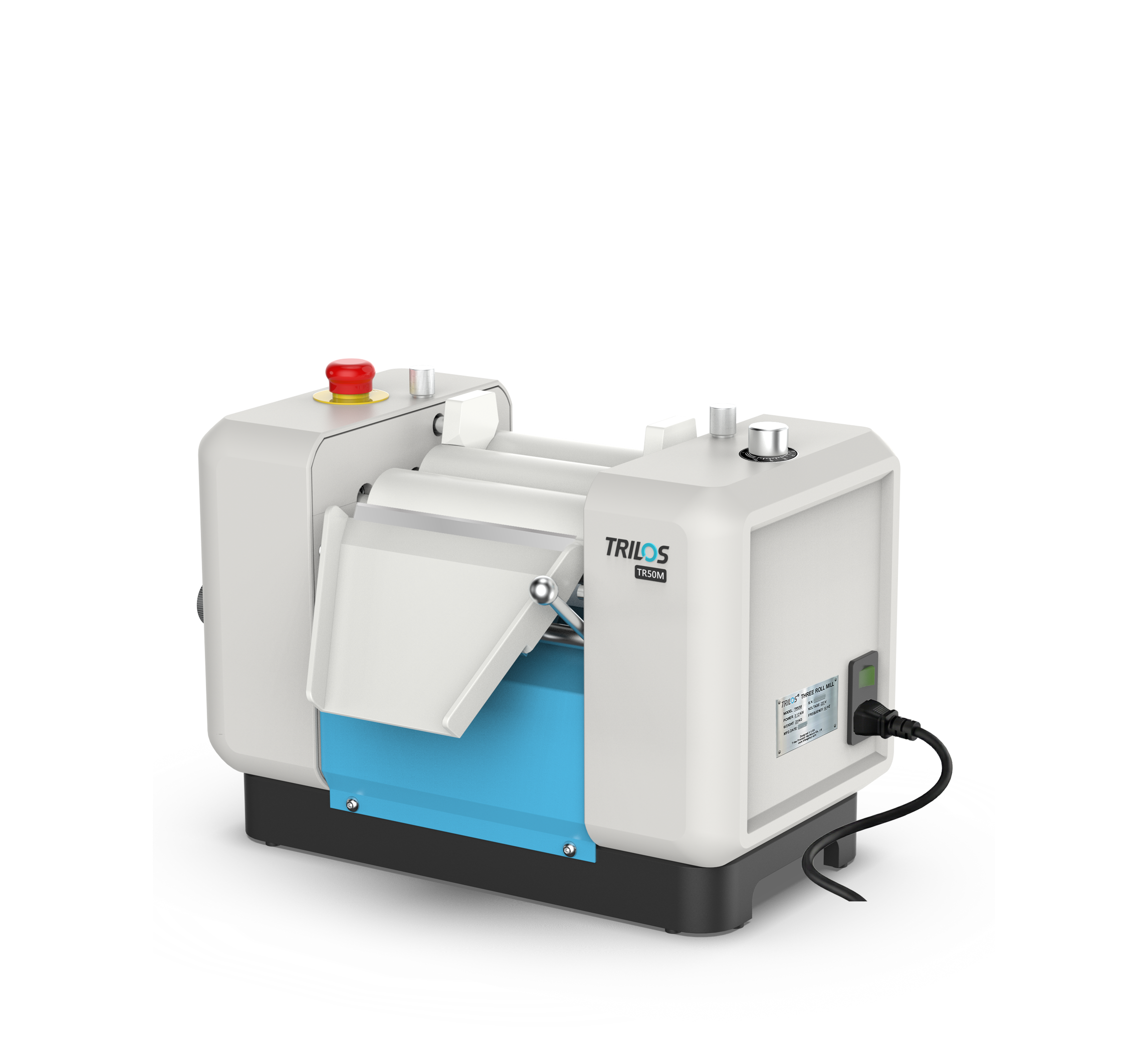
Among the many refining equipment, the three roll mill is the most effective grinding and dispersing equipment for high-viscosity materials, making it suitable for refining chocolate cocoa mass. The main function of the three roll mill is to rely on pressure and shear force to overcome the cohesive force within the paste, achieving the purpose of pulverization and dispersion.
Material: Cocoa Butter + Sugar + Milk Powder + Cocoa Powder
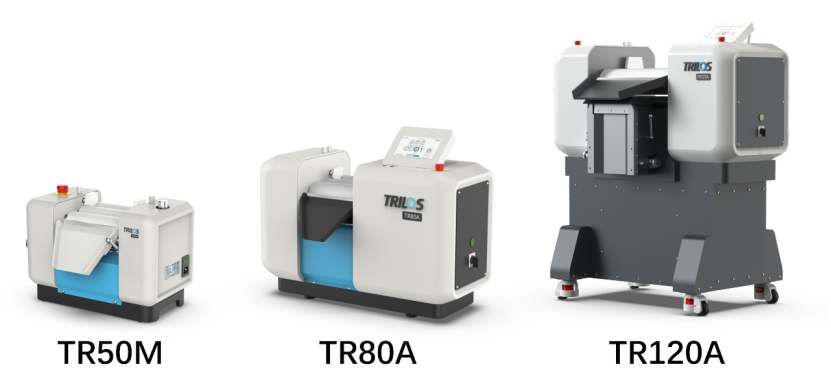
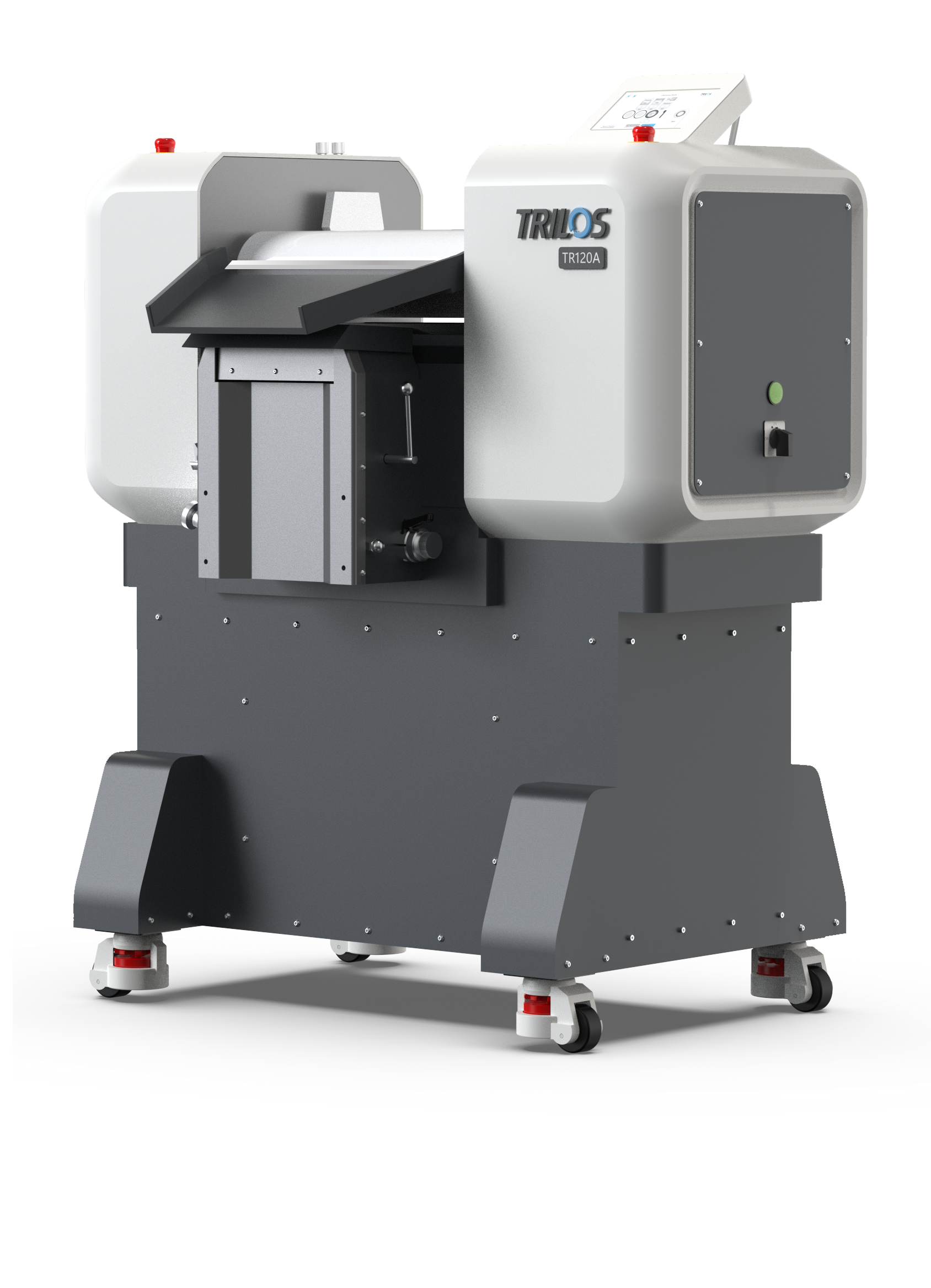
Processing Equipment: TRILOS TR120A Electronically Controlled Three-Roll Mill, Zirconia Rollers + Alloy Steel Scraper Blades
First, melt the cocoa butter on a heating table, then add sugar, milk powder, and cocoa powder. After mixing and agitating, TRILOS TR120A production-scale three roll mill was used to grind and disperse.
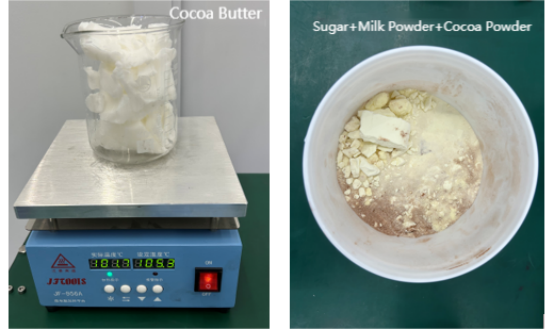
Figure 2. Experimental Materials
The TRILOS TR120A is a production-scale three roll mill. Its maximum processing capacity reaches 60L/hour. It utilizes an electronic operation control system, perfectly ensuring production and processing accuracy. The application of various special attachments allows the equipment to easily handle various complex working environments and processing materials. Multiple safety protection measures are adopted to ensure operational safety throughout the production process.
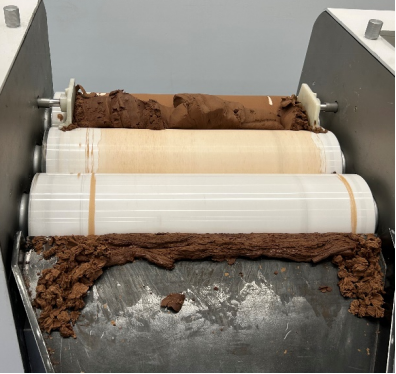
Figure 3. Dispersing cocoa mass with TRILOS TR120A three roll mill
The dispersion process is shown as follows: (Gap Mode)
|
Model |
TRILOS TR120A |
|
|
Roller Material |
Zirconia |
|
|
Rotation Speed |
400 RPM |
|
|
Gap |
Feed Roll: 80㎛ |
Feed Roll:40㎛ |
|
Apron Roll:40㎛ |
Apron Roll:20㎛ |
|
|
Times |
1 |
2 |
During the operation of the three roll mill, there was no material leakage. Discharge was uniform, roller parallelism was good, and there was no misalignment after use. Particle size of the dispersed sample was tested to be 22㎛ by a micrometer, meeting the customer's requirements.
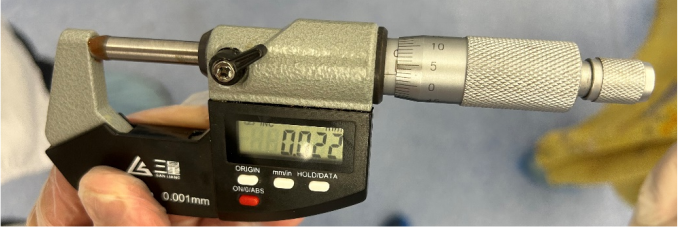
Figure 4. Particle Size of Cocoa Mass
Introduction to TRILOS
TRILOS is a precision machinery manufacturer that regards customer satisfaction as the final goal. It strives to combine the most advanced technological processes with the latest demands of our customers to design high-quality products that best meet their needs.
Advantages of TRILOS Three Roll Mills:
1. TRILOS three roll mill adopts a single cycle, which has the potential to fully achieve homogenization and dispersion of materials, reduce particle size and break agglomerated particles. The homogenized paste obtained can lay a perfect foundation for the further processing of the material.
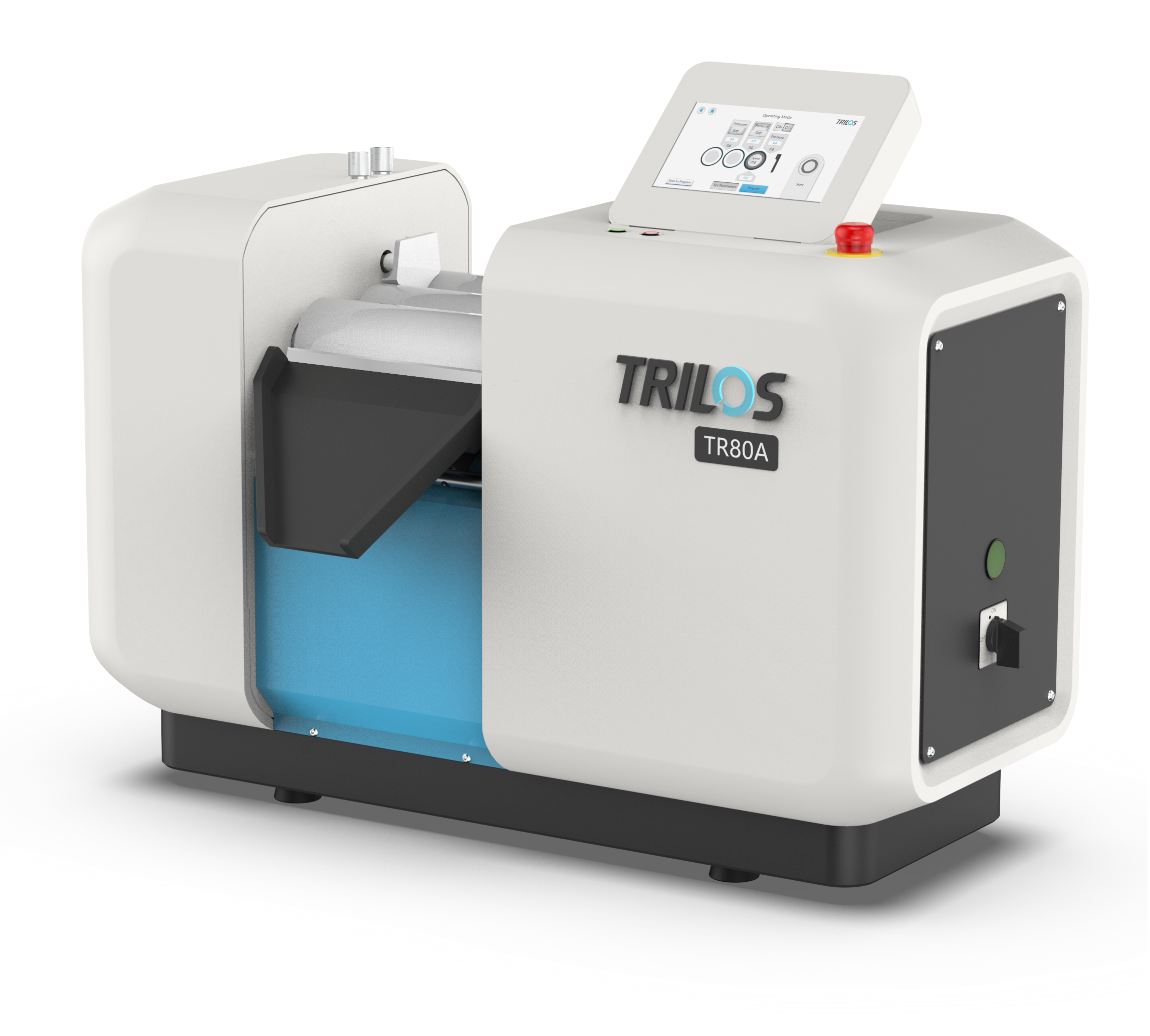
2. The distance between each roller can be adjusted by the touch screen to ensure perfect roller parallelism. The elastic tensioned scraper socket ensures constant pressure on the scraper and does not require readjusting during operation.
3. Rollers of different materials can all be used. The selection of roller and scraper materials - from stainless steel to alumina, silicon carbide and zirconia - meets various different needs.
4. The safety devices installed on the three roll mill ensure the maximum safety of the operators, and the machine can be cleaned simply and quickly.
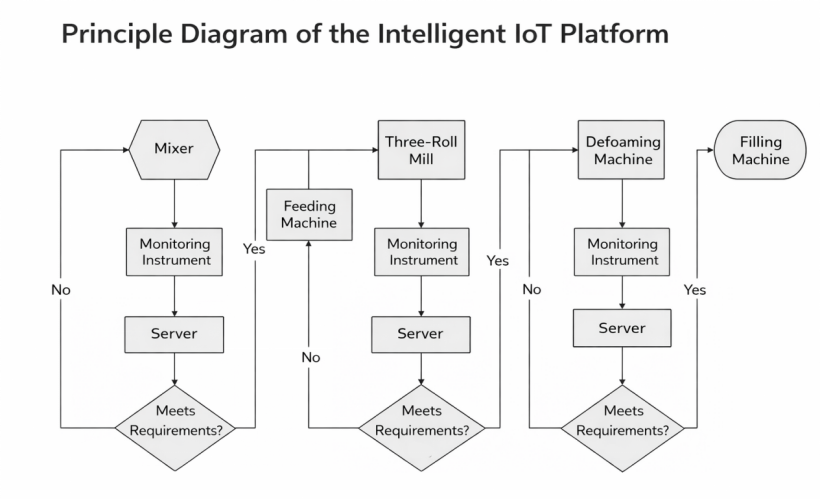
5. TRILOS 'industry-first Internet of Things (IoT) and intelligent three roll mill solution has addressed the problems encountered by customers during use, such as the inability to quantitatively analyze data, data loss, independent devices, and the inability to be networked for management and control. Enable customers to conduct data analysis on the equipment, allocate and manage the permissions of employees, keep full records and backups of the equipment operation process, which is conducive to the research and design development of processing parameters. In addition, the intelligent IoT platform can also be connected to equipment platforms such as mixers, three roll mill, feeders, and homogenizers. At the same time, it can be connected to online viscometers, online particle size analyzers, and online near-infrared analyzers for real-time monitoring.