

Application

In the chemical industry, three roll mills are often used for the dispersion of adhesives, silicone rubbers, coatings, and inks. The efficient mixing and dispersion effects of three roll mills significantly improve the quality of these products, meeting customers' demands for high-performance products.
In the chemical industry, dispersers are used for the dispersion of coatings, the preparation of inks, etc. They can process chemical raw materials to the nano size, improving the stability and quality of products. At the same time, dispersers can also be used for the emulsification and dispersion of chemical products, enhancing the quality and stability of products.

Three roll mills are widely used in the research, development, and production of cosmetics. They play a crucial role in the grinding, mixing, dispersion, and color adjustment processes of high-viscosity cosmetics such as cold creams, lipsticks, and liquid foundations. For different types of products and different requirements for the fineness of the paste, the users can adjust the gaps between rolls according to the actual requirement of production quality, and thus manfacturing satisfied and expected products.
In the cosmetics industry, dispersers are mainly used in the emulsification, suspension, and dispersion processes of liposomes, essence, emulsion, and hyaluronic acid gel. For example, ultra-high-pressure homogenization technology can crush the particles in emulsion to the micron or nano size, making the texture of the emulsion finer and smoother, hence improving comfort and ductility. Active ingredients such as vitamins and antioxidants processed by high-pressure disperser can better penetrate into the deep layer of skin, enhancing the products’ efficacy and absorptivity. High-pressure disperser prevent particle sedimentation and agglomeration by re-dispersing particles and evenly suspending them in the solvent, prolonging the service life of cosmetic products. Through high-pressure homogenization treatment, the fineness, gloss, and stability of products can be effectively improved, thereby enhancing the user experience.
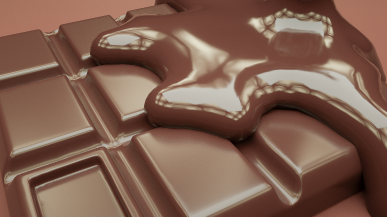
Three roll mills can be used to grind and disperse high-viscosity food slurries such as chocolate and syrup, enabling them to reach the required fineness and evenness, thus improving taste and quality of the food. In food and beverage production, three roll mills can be used to mix and disperse various food ingredients and additives, ensuring the accuracy and consistency of the formula.
Dispersers can refine fat globules, protein particles, etc. in food, improving the fineness and taste of food. For example, in dairy product processing, dispersers can break the fat in milk into smaller particles, making the milk look whiter and taste smoother. By refining the particles in food, disperser reduce the particle size and density differences between particles, preventing the stratification and sedimentation of the slurry, in order to improve the stability of food. It is significant to extend the shelf life of food and improving food quality. Dispersers can also be applied in the production of certain specific foods. For instance, in the production of ice cream and etc., they can improve the fineness and looseness of the liquid material, significantly enhancing the internal texture. Additionally, dispersers can be used in the production of fruit juice, slurries, etc., to prevent or reduce the stratification of the liquid material, improve its appearance, make its color more vivid, aroma stronger, and taste more mellow.
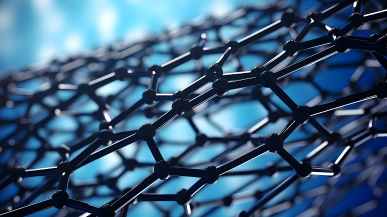
In the new material industry, three roll mills can achieve fine deagglomeration and dispersion of micron-sized powder slurries to reach the optimal particle size, which is vital for the preparation of new materials. Users can adjust the gaps between rolls and roll speed to precisely control particle size, thus producing high-performance materials. In the new energy field, such as solar cells and fuel cells, three roll mills can be used for the dispersion and grinding of related slurries, improving the evenness and stability of the slurries and thus enhancing the performance of new material products.
Dispersers can process dispersion liquid or slurries to the nano size, achieving even dispersion and stable existence of nanomaterials. This is significant to enhance the performance and application value of nanomaterials. During the research and development of new materials, dispersers can evenly mix raw materials with different properties and particle sizes and refine them to the nano size, optimizing the material properties, such as enhancing the materials’ strength and electrical conductivity.

Three roll mills are often used for the dispersion and grinding of ointments. Using the shear force and friction between the rolls, three roll mills can efficiently disperse and grind ointments. This dispersion way can ensure that the drug components in the ointment are evenly mixed with the base material to achieve an ideal dispersion effect. At the same time, according to the viscosity and dispersion requirements of the ointment, three roll mill can precisely control the dispersion fineness of the ointment by adjusting the gap and rotation speed of the rolls. After being dispersed by a three roll mill, the particle size of the ointment is significantly reduced and its evenness is improved, enabling the active ingredients in the ointment to fully contact with the skin surface, thereby improving the permeability and absorption of the ointment.
Dispersers are one of the important tools for preparing nanomedicines. Through high-pressure homogenization process, medicine particles can be refined to nanoscale, significantly improving the solubility and bioavailability of medicines. Dispersers can evenly mix substances in different phases to form a stable system and play a key role in the vaccine production process. For example, as manufacturing nanoemulsion vaccines, dispersers can evenly disperse the oil phase and water phase to prepare vaccines with uniform particle size and good stability. Dispersers can also be used to manufacture various drug carriers, such as liposomes, nanoparticles, and microspheres. By controlling the parameters of high-pressure homogenization, the particle size, morphology, and structure of drug carriers can be adjusted to meet the needs of different drugs.
