

Keywords: Cable pigments, Pigment dispersion, three roll mill, Three-roll grinder, Intelligent three roll mill
Cable pigments are required to meet the requirements of weather resistance, temperature resistance, migration resistance, and compatibility with cable substrates (such as PVC, PE, XLPE). They are mainly composed of organic pigments (e.g., phthalocyanine series) and inorganic pigments (e.g., titanium dioxide, carbon black). Their core functions are to realize cable coloring identification, ultraviolet protection, and improve appearance consistency. The dispersion effect directly affects the color uniformity, hiding power, and long-term use stability of cables. In actual production, pigments are prone to form agglomerates due to intermolecular forces. Traditional dispersion equipment (such as high-speed mixers) is difficult to completely break the micron-level agglomerate structure, resulting in uneven distribution of pigments in the substrate, appearance of color spots and color differences, and even affecting the mechanical properties and aging resistance of the cable insulation layer, which has become a key pain point restricting the quality upgrade of cable products.
TRILOS three roll mill, with its unique inter-roll shear extrusion effect and precise temperature control design, has become the core equipment to solve the dispersion problem of cable pigments: its high-hardness roll surface and precise gap adjustment function can generate strong shear force to completely break pigment agglomerates, achieve uniform dispersion, and ensure full integration of pigments and substrates; at the same time, the controllable roll temperature can avoid thermal degradation of substrates during the dispersion process and ensure the stable performance of cable materials. Compared with traditional equipment, TRILOS three roll mill can not only improve pigment utilization rate and coloring uniformity but also enhance the weather resistance and migration resistance of cables, making it an essential equipment to ensure product consistency and reliability in high-end cable production.
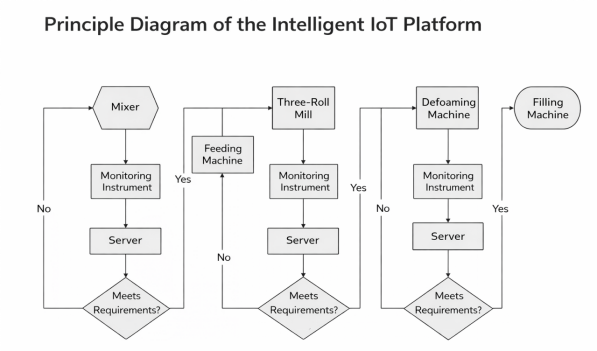
To address the industry challenges of cable pigments, TRILOS has launched an intelligent three roll mill dispersion solution.
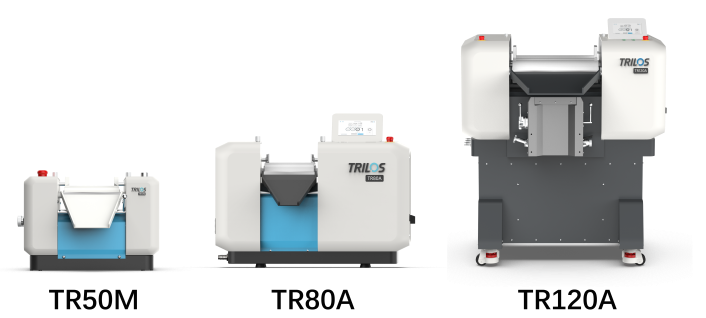
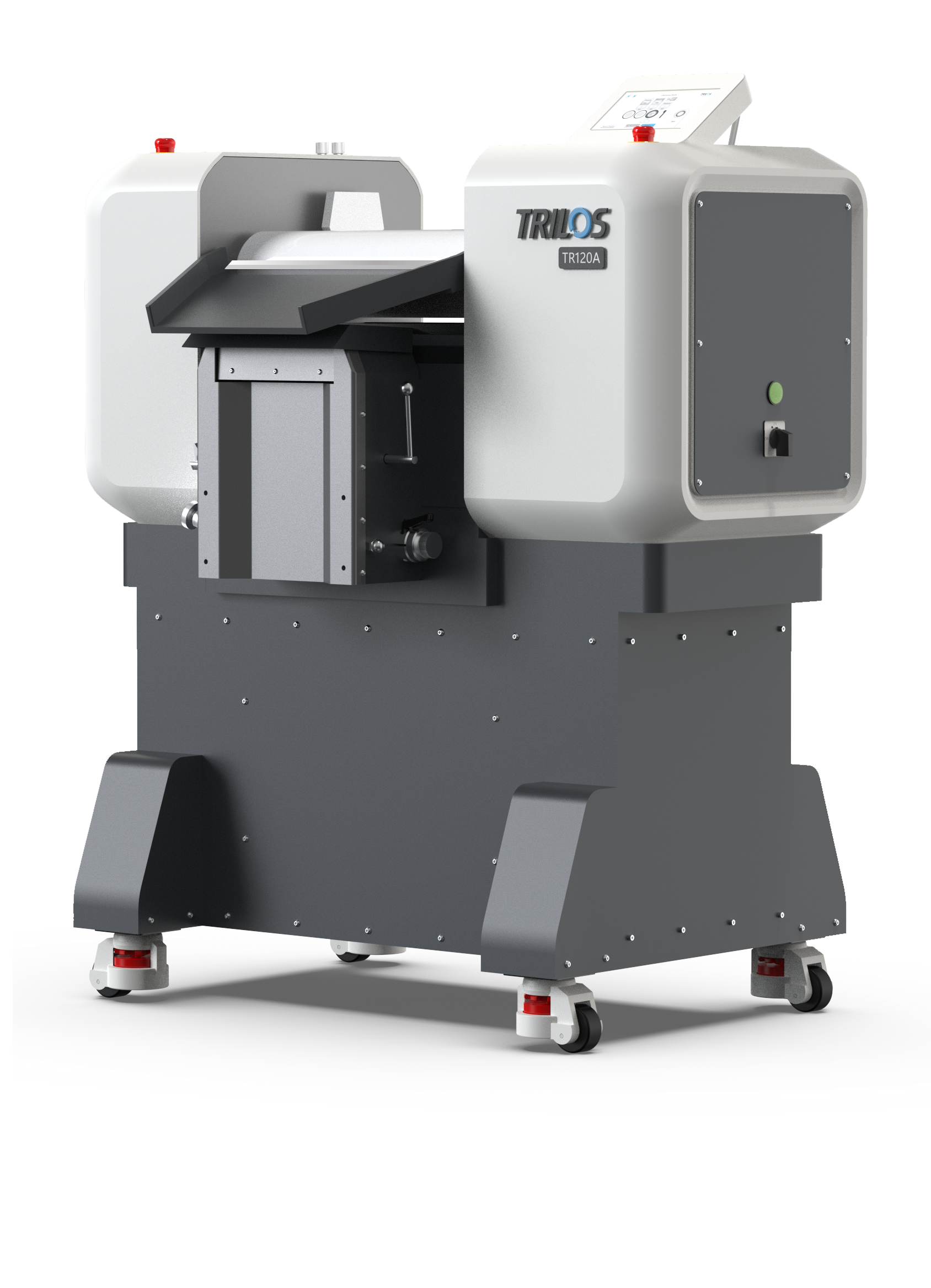
Processing Equipment: TRILOS TR120A Electronically Controlled three roll mill
The TRILOS TR120A three roll mill is a production-type three-roll grinding equipment with a maximum processing capacity of 60L/hour. It adopts an electronic operation and control system to ensure the precision of production and processing. The use of various special accessories enables the equipment to easily cope with various complex working environments and processed materials. Multiple safety protection measures are adopted to fully ensure operational safety during the production process.
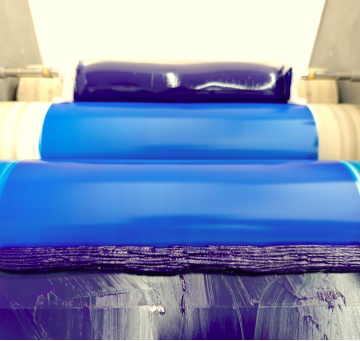
Figure 1: Dispersion of Cable Pigments Using TRILOS TR120A Intelligent three roll mill
In actual operation, the TRILOS TR120A intelligent three roll mill performs excellently, with no material leakage during operation, uniform discharge, good roll parallelism, and no displacement after use. After being processed 4 times by the three roll mill, the pigment was tested with a Hegman gauge, and the fineness reading was less than 5μm, meeting the customer's strict requirements for material particle size.
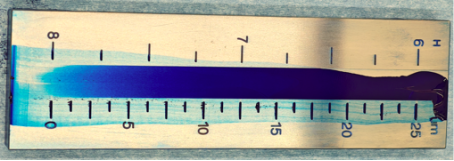
Figure 2: Hegman Gauge
The LISICO Dispersion Homogeneity Tester LS-1 adopts time-domain nuclear magnetic resonance (TD-NMR) technology. It accurately evaluates the dispersion of particles in the slurry by measuring the nuclear magnetic resonance relaxation time or relaxation spectrum of the slurry. The sample does not need to be diluted, and the test does not damage the sample. It can be completed in a few minutes. It can not only make up for the micro-dispersion problems that traditional viscosity testing cannot reveal but also provide quantifiable stability indicators for the slurry. It can also real-time track the agglomeration trend of the slurry during storage and use, helping process optimization and quality control.
We used the LISICO Dispersion Homogeneity Tester LS-1 to test the T2 relaxation time of the samples dispersed by the three roll mill.
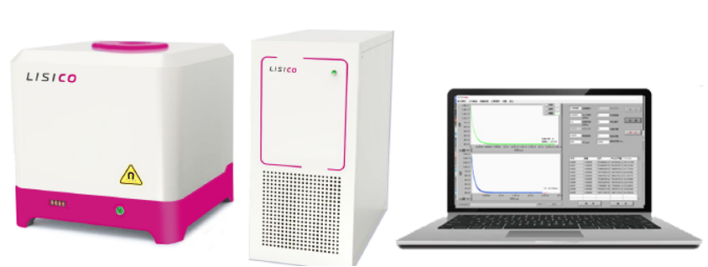
Figure 3: LISICO Dispersion Homogeneity Tester LS-1
The figure below shows the T2 relaxation time of samples with different dispersion times. For samples with the same system formula, the shorter the relaxation time, the stronger the interaction between the solvent and the particles, and the more stable the slurry. It can be seen from the figure that the T2 relaxation time of the sample processed 4 times by the TRILOS TR120A three roll mill is lower than that of the sample processed 3 times, indicating that increasing the dispersion times has a positive effect on improving the stability of the pigment.
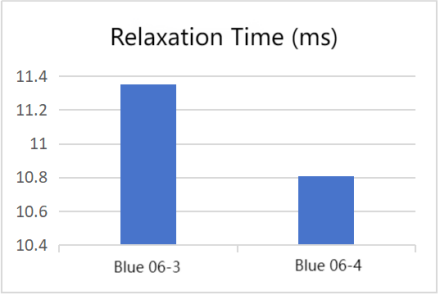
Figure 4: T2 Relaxation Time of Samples with Different Dispersion Times
Introduction to TRILOS
As a precision equipment manufacturer, TRILOS takes customer satisfaction as its ultimate goal, striving to combine excellent process technology with customers' actual needs to design products that are close to customers' requirements.
TRILOS is actively exploring the global market, and its products have been widely used in regions such as the United States, China, Europe, South Korea, Japan, and Taiwan.
Advantages of TRILOS three roll mill
1. TRILOS three roll mill adopts a single cycle, which may completely realize the homogenization and dispersion of substances, reduce particle size, and break agglomerated particles. The result is a homogenized slurry, which can lay a solid foundation for the further processing of materials.
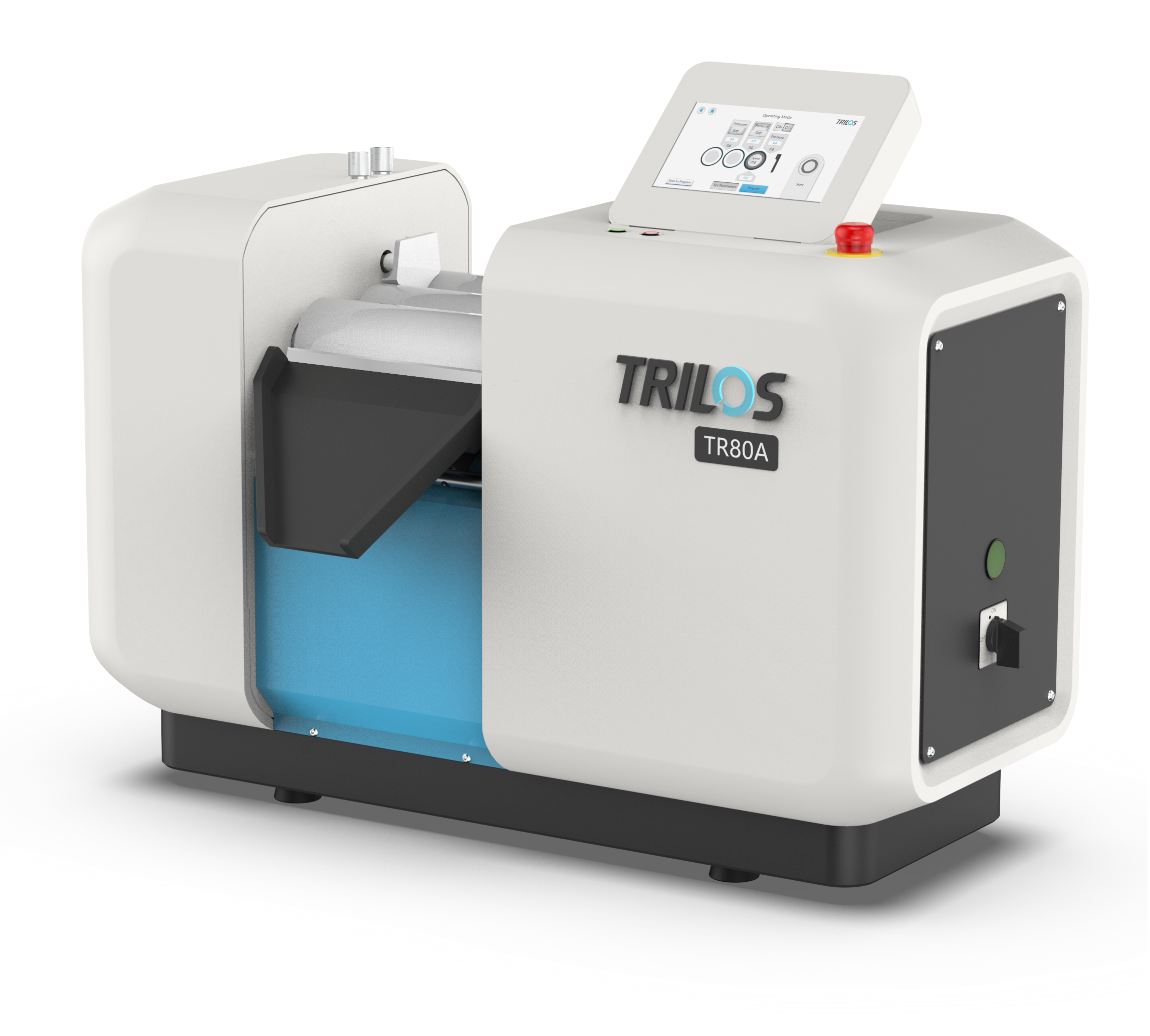
2. Each inter-roll distance can be adjusted by a touch screen to ensure roll parallelism. The elastically tensioned scraper socket ensures constant pressure of the scraper, and no re-adjustment is needed during operation.
3. Rolls of different materials can be used. The selection of roll and scraper materials - from stainless steel to alumina, silicon carbide, and zirconia - meets various needs.
4. The safety devices on the three roll mill ensure the safety of operators, and the machine can be cleaned simply and quickly.
5. TRILOS's IoT and intelligent three roll mill solutions solve the problems encountered by customers in use, such as unquantifiable data analysis, data loss, independent equipment, and inability to connect to the network for management and control. It allows customers to conduct data analysis on equipment, assign permissions and manage employees, and keep full records and backups of the equipment operation process, which is conducive to the research and design and development of processing parameters. In addition, the intelligent IoT platform can also access equipment platforms such as mixers, three roll mills, feeding machines, and homogenizers, as well as online instruments such as online viscometers, online particle size analyzers, and online near-infrared analyzers for real-time monitoring.