

Keywords: MLCC; termination electrode silver paste; three roll mill; dispersion; sintering
Abstract: Multilayer ceramic capacitors (MLCC) are the main passive components in the electronics industry. Due to the influence of their special multilayer structure on the performance of the components, the way how to improve the performance of terminal electrode becomes a direct factor that restricts product quality. This article proposes a method of using a three roll mill to efficiently disperse the silver paste of the termination electrode raw material, ultimately improving and optimizing the dispersion effect of the silver paste, so as to achieve the purpose of enhancing product quality and stability.
Multilayer Ceramic Capacitor (MLCC) Industry Background
Multilayer ceramic capacitors (MLCC) have many advantages such as small volume, low cost, large capacitance per unit volume, high operating temperature, compact structure, low internal inductance, high insulation resistance, low leakage current, low dielectric loss, and good frequency characteristics, and are widely used in various fields of electronic equipment.
Multilayer ceramic capacitors (MLCC) can be applied to various circuits, such as oscillation circuits, timing or delay circuits, coupling circuits, decoupling circuits, filtering circuits, high-frequency noise suppression circuits, and bypass circuits. At present, it has become a chip component with large consumption and rapid development in the world and is in a period of rapid development.
Manufacturing Process
The termination electrode structure of multilayer ceramic capacitors (MLCC) is to seal the sintered ceramic body with an Ag layer and then plate Ni layer and Sn or Sn/Pd successively. The silver paste for termination electrodes is composed of an organic carrier, glass frit, and silver powder, etc., and forms the termination electrodes of MLCC through endcapping, drying, and endfiring.
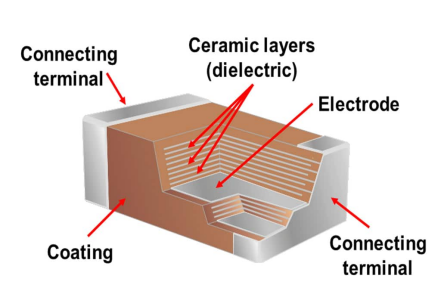
If the silver electrode paste is not properly processed, the paste is unevenly dispersed, and the particle fineness does not meet the standard, it will cause problems such as rough silver layer surface, low flatness and brightness, the appearance of bubbles and pinholes. After electroplating, the plating layer has decreased resistance to soldering heat, solderability, and adhesion, fails the aging test, and the electrical performance of the component decreases.
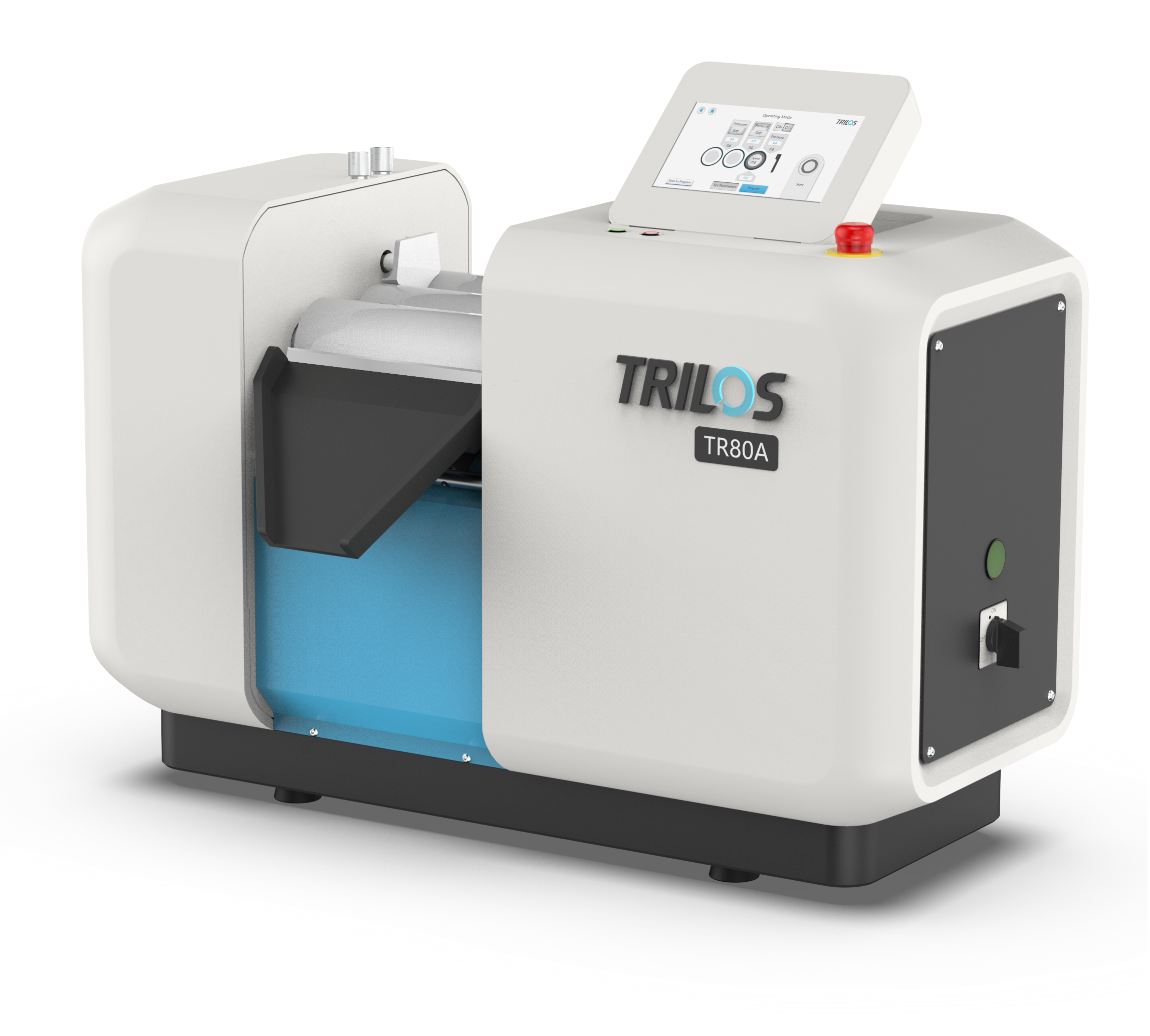
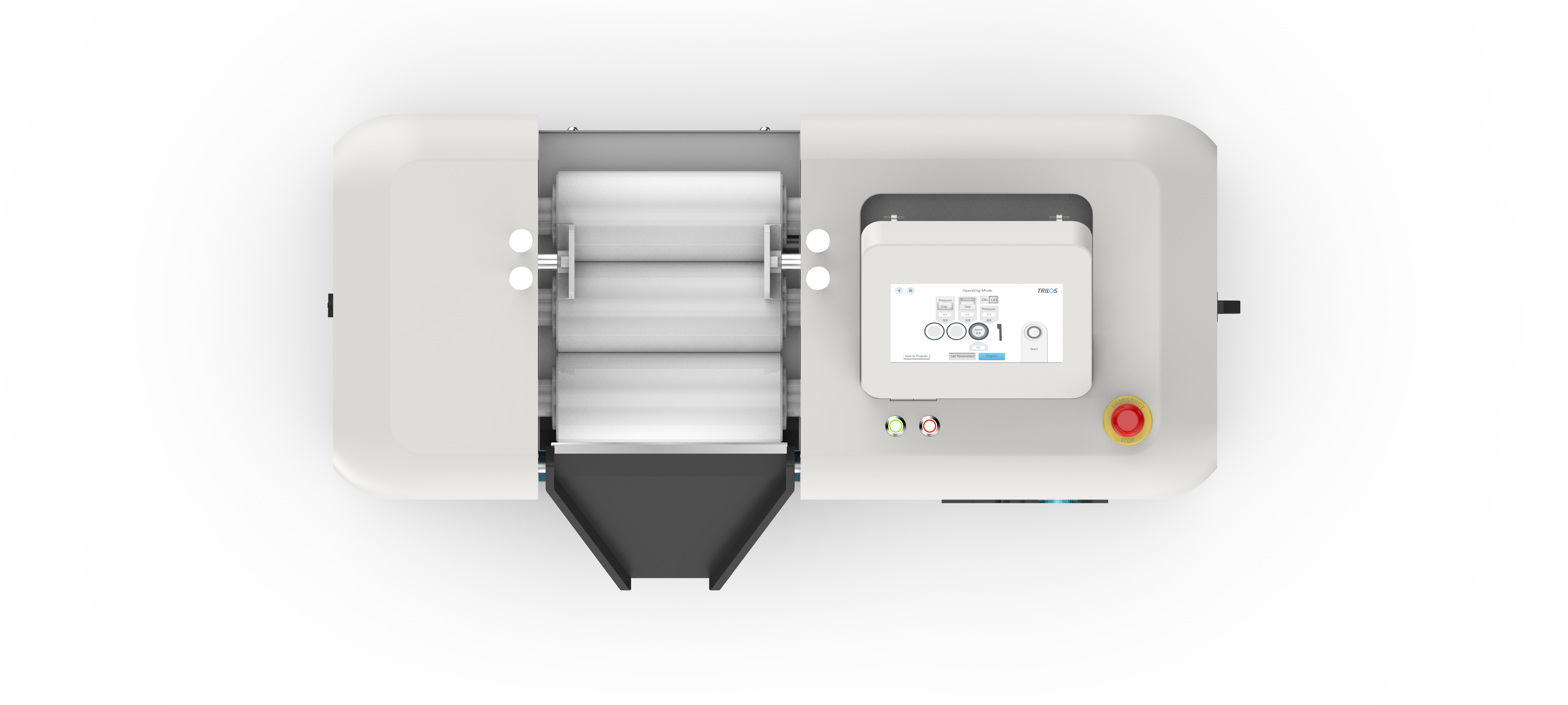
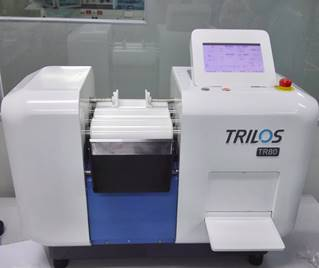
Solution: Trilos TR80A Three Roll Mill
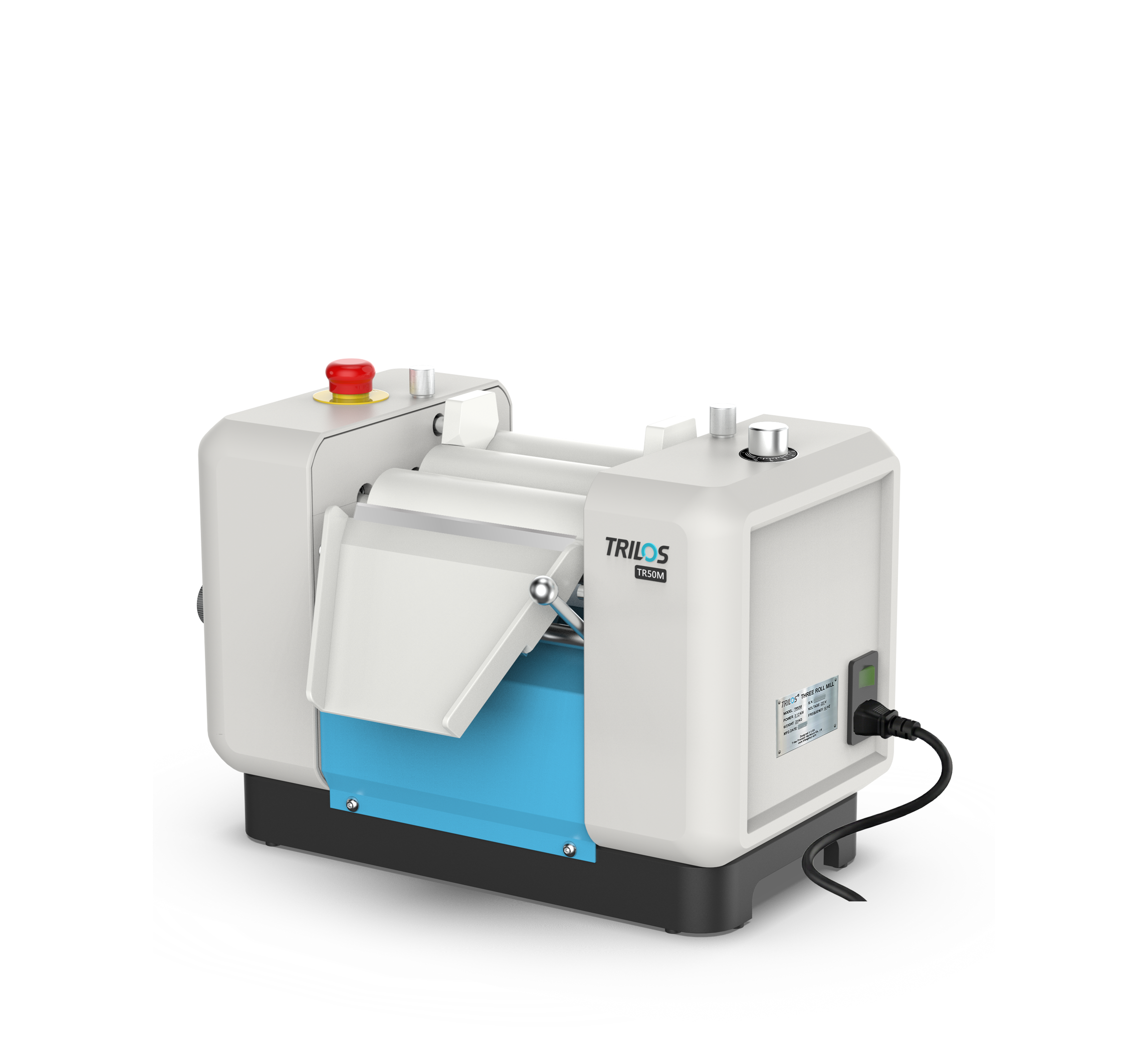
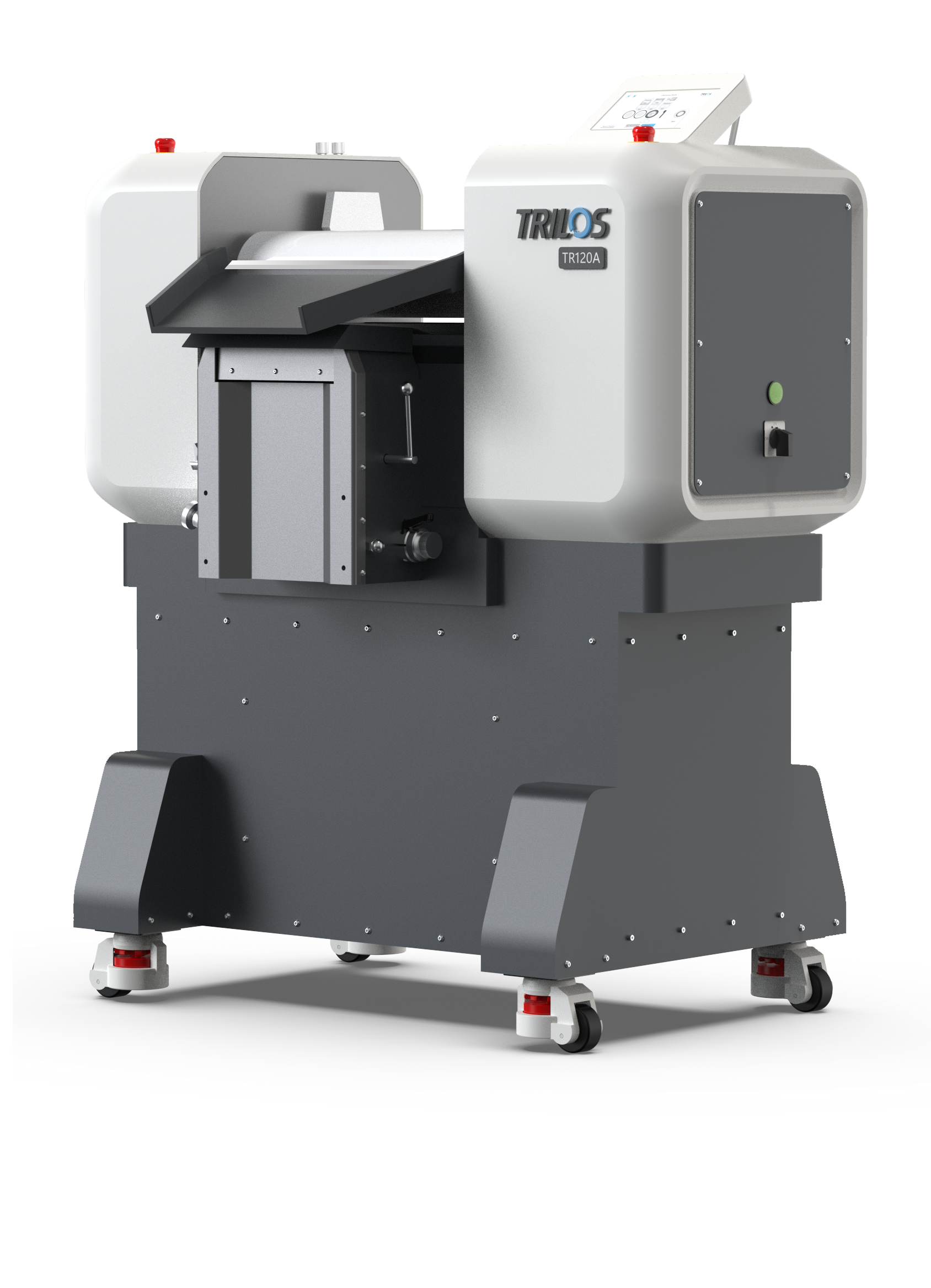
Three roll mill is an effective processing equipment for grinding and dispersing medium and high viscosity paste. Especially for the dispersion and grinding of paste containing various resin solvents, metal particles, organic particles, and bulk fillers, it has an ultimate effect that is difficult to be replaced by other equipment. The theoretical minimum processing accuracy of the TR80A three roll mill can reach 1 μm, and this value mainly depends on the dispersion characteristics of the material itself and the initial particle fineness value.
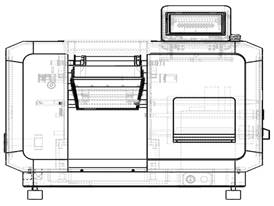
Trilos TR80A three roll mill adopts touchscreen control, and the roll gap is independently adjusted by 4 stepper motors and a PLC control unit (as shown in the figure below). The response and feedback control speed is fast, the error is small, the actual gap value is synchronously displayed on the touchscreen. The high stability of the equipment is beneficial to the determination of the customer's process.
Case
Material: Ceramic capacitor silver paste (a national MLCC enterprise in Chengdu)
Original particle fineness: 3 μm
Initial fineness: < 25 μm
Processing equipment: Trilos TR80A electronically controlled three roll mill with zirconia rolls + alloy steel scraper
Viscosity: 17 KCPS (provided by the manufacturer)
Final fineness requirement: Below 7 μm
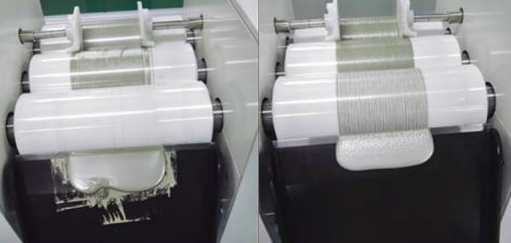
Dispersion and grinding process (gap mode) are as follows:
|
Silver Paste Net Weight:50g Start time:2:00 PM |
|||||
|
Times |
Gap1/μm |
Gap2/μm |
Rotation Speed(r/min) |
Apron pressure/N |
Result |
|
1 |
100 |
60 |
100 |
45 |
|
|
2 |
60 |
40 |
100 |
45 |
|
|
3 |
40 |
20 |
100 |
45 |
|
|
4 |
20 |
15 |
100 |
45 |
|
|
5 |
15 |
10 |
100 |
45 |
Fineness: 90% 8μm |
|
6 |
12 |
8 |
100 |
45 |
Fineness: 90% 3.5μm |
|
|
Fineness:90% 3.5μm |
||||
|
Loss/g |
4 |
||||
|
Conclusion: |
Size is qualified, loss is small and effect is ideal. |
||||
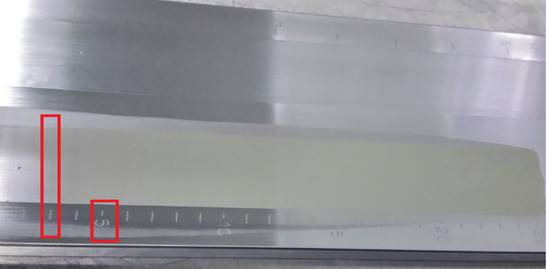
By the detection of a hegman gauge, the fineness reached 8 μm after 5 steps, approaching the requirement 7 μm. On this basis, the sixth grinding and dispersion proceeded, and the final fineness reached 3 - 4 μm, close to the initial particle fineness of 3 μm of the silver paste, effectively improving the fineness and uniformity of the overall paste dispersion and enhancing the product quality. The fineness is shown in the figure below.
 After the ground and dispersed silver paste was processed, through the observation of an electron microscope, the electroplating effect on the silver layer surface was good. The paste manifests a continuous, uniform, and dense silver layer surface, without obvious gaps and thickness variations, as well as no defects such as pinholes, peeling, blistering, and flaking. By testing the adhesion, solder resistance, reliability, and electrical performance of the termination electrodes after electroplating, the results can fully meet the production requirement.
Trilos TR80A three roll mill has solved the problems such as uneven slurry dispersion, unqualified particle fineness and etc. Meanwhile, its convenient and visual operation has also helped the R&D personnel to formulate grinding process parameters, quantify various data indicators, and thus realize large-scale and standardized process production. It has solved the problems of relying on experienced employees to adjust the equipment in the early stage, unstable grinding and dispersion, serious slurry loss, and long time consumption. After the ground and dispersed silver paste is tested in the MLCC production line of the company, all of process performance indicators are good, and the product manufacturing quality is relatively stable.