

The solar photovoltaic industry is undergoing rapid and profound technological changes. The cost reduction driven by technological innovation will continue to promote grid parity worldwide, thus dramatically impacting the global energy structure.

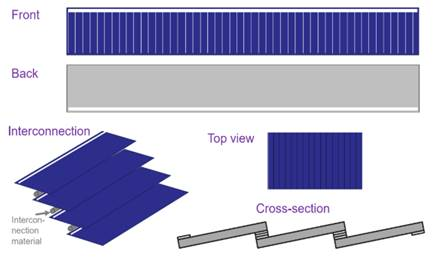
As a representative of high-power solar PV panel technology, imbricated panels use slicing technology to cut the cells with redesigned grid lines into small pieces of reasonable shapes. These small pieces are superimposed and arranged, welded into strings with special conductive adhesive materials, and then laminated into modules after series-parallel layout. Imbricated panels are becoming an important development direction of PV panel technology, and enterprises in the industry are actively promoting the technological research and development and large-scale manufacturing of imbricated panels. Conductive adhesive is one of the critical materials for imbricated panels. It consists of conductive particles and a polymer matrix. The former determines the conductivity, and the latter, as the carrier of the conductive particles, determines the curing speed, adhesion, and aging resistance of the conductive adhesive. Currently, most of the common conductive adhesives have a matrix composed of epoxy resin, acrylate, and silicone matrix. The conductive filler is mainly silver powder. The conductive performance of the conductive silver adhesive mainly depends on the contact between the conductive fillers to conduct current. The dispensing methods of conductive silver adhesive include screw dispensing, jet dispensing, and screen printing. The quality of the conductive silver adhesive plays a decisive role in the reliability of the imbricated panels. If the conductive silver adhesive is not evenly dispersed, it will affect dispensing and screen printing, thus having an adverse impact on the imbricated panels. Therefore, choosing the appropriate dispersion equipment has a crucial impact on the dispersion of the conductive silver adhesive.
Case
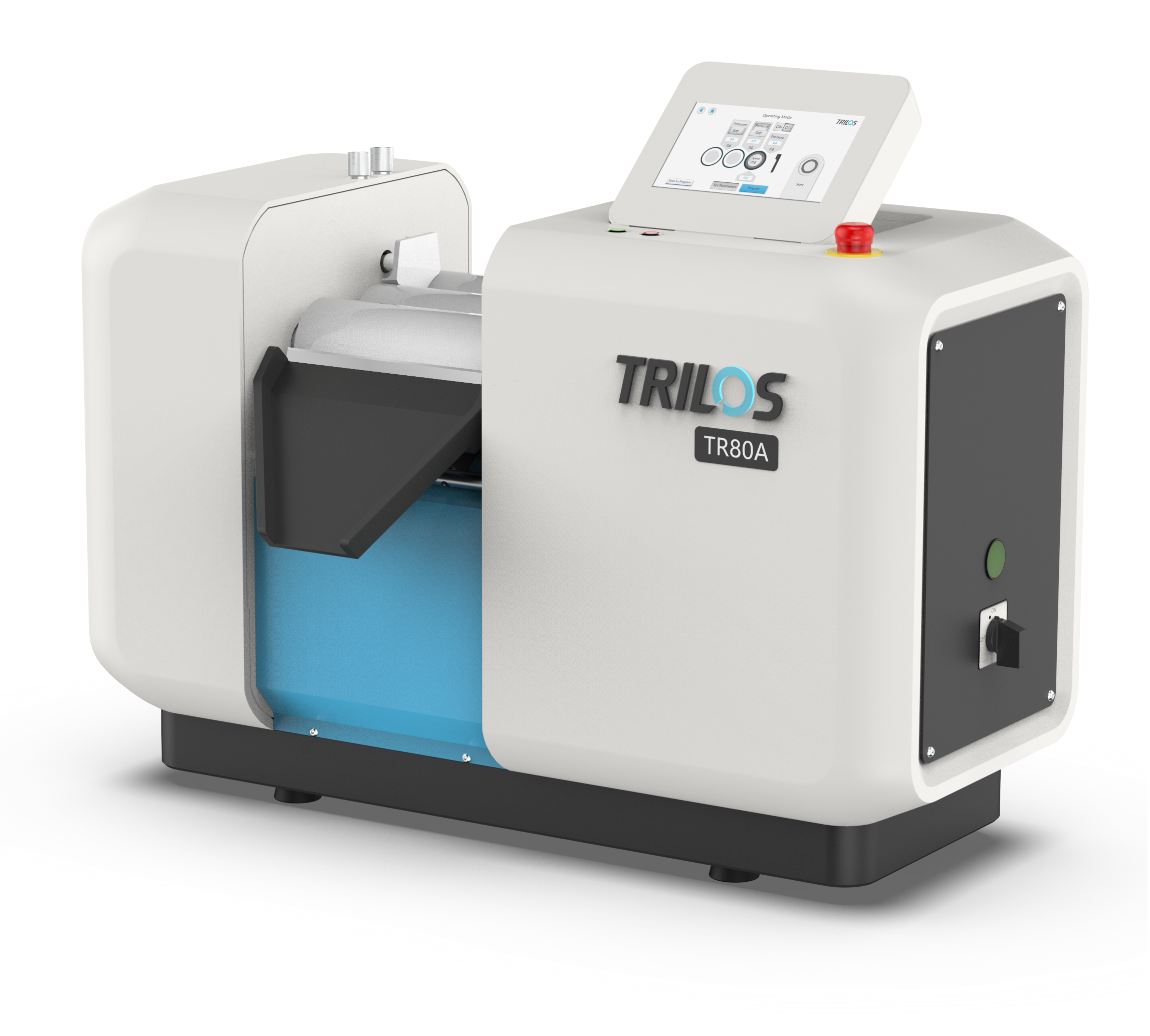
Solution: TRILOS TR80A three roll mill
Three roll mill (also known as the three roll grinder) is an effective processing equipment for grinding and dispersing medium and high viscosity slurries. Especially for the dispersion and grinding of slurries containing various resin solvents, metal particles, organic particles, and bulk fillers, it has a final effect that other equipment cannot attain. The theoretical minimum processing accuracy of the TR80A three roll mill can reach 1㎛, and this value mainly depends on the dispersion characteristics of the material itself and the initial particle fineness value.
TRILOS TR80A three roll mill is a pilot model three roll mill. Its processing capacity ranging from a minimum of 0.02 L/hour to a maximum of 20 L/hour perfectly solves the problems of laboratory testing and small&medium-scaled trial production for users. The highly innovative design makes the equipment structure more compact and small, which can be conveniently placed on the laboratory table for use. The user-friendly UI is realized by an industrial control panel. The unique online gap correction and formula menu functions make the equipment operation easier, allowing users to control it in an interactive way instead of facing a cold equipment.
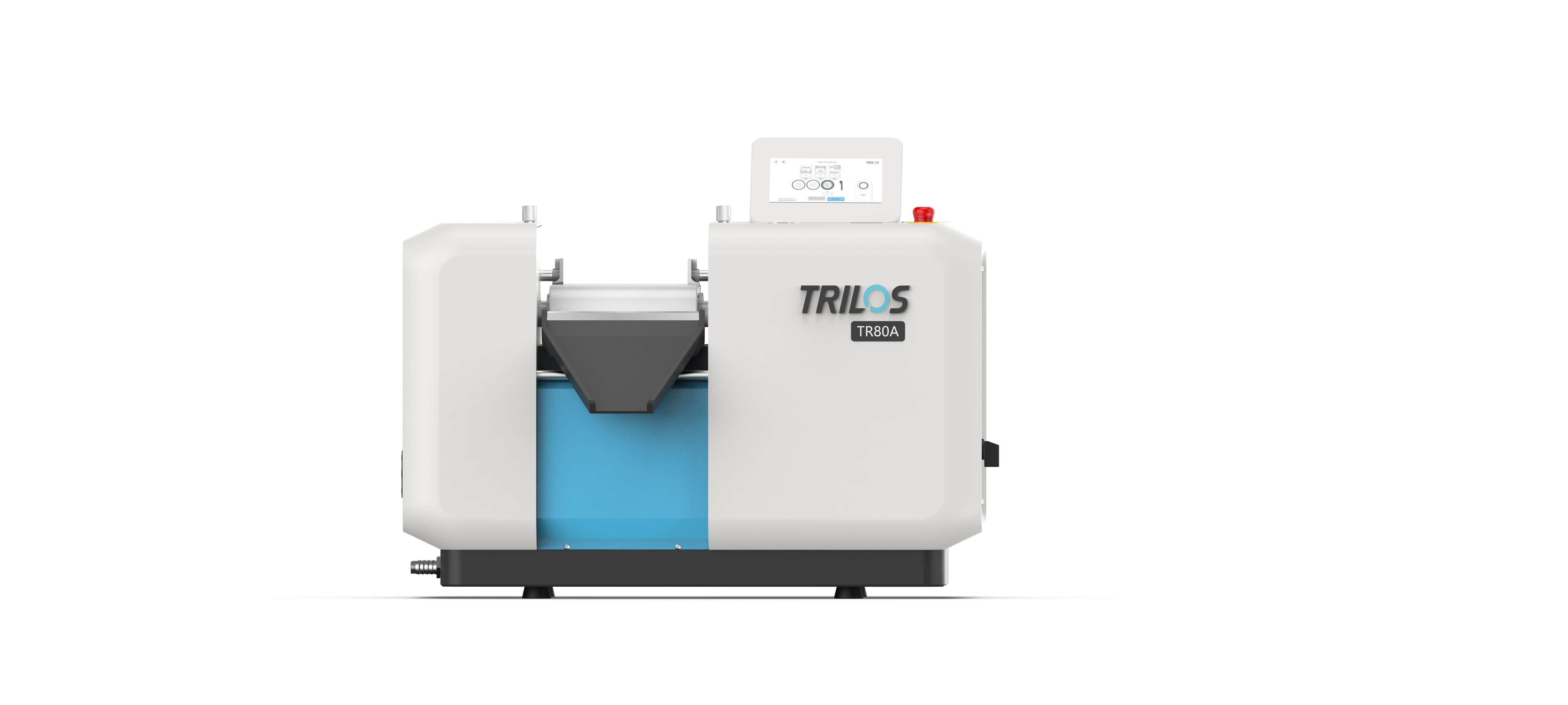
TRILOS TR80A three roll mill
Material: Conductive silver adhesive (a supplier of conductive silver adhesive for imbricated PV)
Initial fineness: 10 μm
Processing equipment: TRILOS TR80A three roll mill with zirconia rolls + alloy steel scraper
Final fineness requirement: Below 5 μm
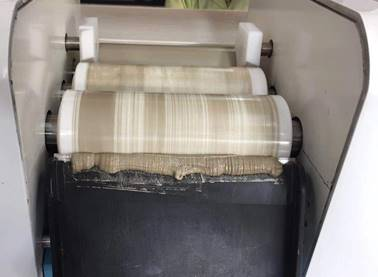
Experiment Process
The dispersion and grinding process is as follows (gap mode):
|
Dispersion experiment for conductive silver adhesive |
||||
|
Times |
Gap 1/ μm |
Gap 2/ μm |
Rotation speed/ r/min |
Apron pressure / bar |
|
1 |
20 |
10 |
200 |
50 |
|
1 |
10 |
5 |
200 |
50 |
|
Result |
Fineness: <5μm |
|||
|
Conclusion |
Fineness is eligible,loss is small,grinding effect is ideal |
|||
By the detection of a hegman gauge, the fineness of the conductive silver adhesive reached below 5 μm after two grinding passes, effectively improving the fineness and uniformity of the overall slurry dispersion, enhancing the product quality, and meeting the customer's requirement.
TRILOS TR80A three roll mill has solved the problems of uneven slurry dispersion, secondary agglomeration of particles, and unqualified fineness for the customer. The processed conductive silver adhesive has high conductivity, high adhesion, and excellent aging resistance, is easy to implement, and has low production cost. At the same time, its convenient and visual operation has also helped the company's R&D personnel quickly formulate grinding process parameters, quantify various data indicators, and thus attaining product consistency and large-scale, standardized process production.