

Keywords: OptiSense film thickness monitoring system, SOFC, SOFC single cell fabrication, Ultra-high Pressure Nano Homogenizer
Solid Oxide Fuel Cells (SOFCs), as highly efficient and clean energy conversion devices, exhibit performance that is critically dependent on the fabrication quality of single cells. SOFC single cells require highly uniform thickness and stable ionic conductivity, among which precise control of film thickness is a key factor. Excessive thickness increases ionic transport resistance and reduces power density, while insufficient thickness may lead to defects such as pinholes and cracks, ultimately causing short-circuit failure.
Conventional film thickness measurement methods, including offline gravimetric analysis, micrometer measurement, eddy current testing, and cross-sectional microscopy, suffer from inherent limitations such as strong time lag, sample destruction, and inability to provide real-time process control. These drawbacks make them inadequate for high-precision requirements in large-scale SOFC fabrication.
The OptiSense film thickness monitoring system, featuring real-time online measurement, non-contact detection, and high-precision feedback, provides an efficient quality control solution for SOFC single cell fabrication. Its implementation significantly enhances process stability and product yield.
1. Measurement Principle and Features of the OptiSense Film Thickness Monitoring System
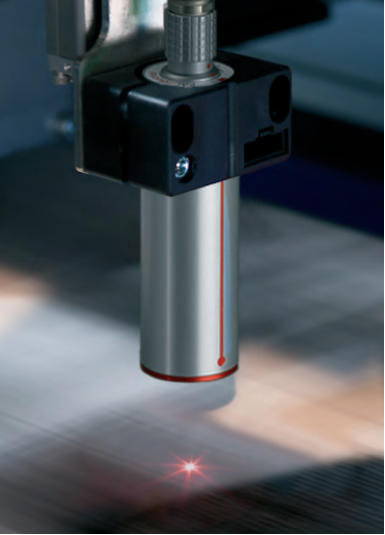
The OptiSense system operates based on a photothermal measurement principle. A short and intense light pulse is applied to heat the coating surface, after which the heat dissipates into deeper layers and the surface cools down. Thinner coatings exhibit faster temperature decay. The time-dependent temperature response is captured by a fast, high-sensitivity sensor and converted into corresponding coating thickness values.
The sensor installation position can be flexibly adjusted according to specific fabrication scenarios, enabling compatibility with various SOFC manufacturing processes.
SOFC single cell fabrication typically adopts a “layer-by-layer forming + co-sintering” process route. Cathode layers (LSCF), electrolyte layers (YSZ), and anode layers (Ni–YSZ) are first prepared via slurry processing steps such as dispersion and homogenization, followed by shaping processes including tape casting or screen printing, and finally co-sintered into an integrated structure.
For these commonly used fabrication processes, the OptiSense film thickness monitoring system demonstrates excellent compatibility. In tape casting processes, the sensor probe can be installed downstream of the doctor blade to monitor wet film thickness in real time, with final dry film thickness calculated based on drying shrinkage models. In screen printing processes, the probe can be integrated into the squeegee assembly or printer frame, enabling synchronized thickness measurement during printing.
The system supports user-defined thickness thresholds. When measured values exceed preset limits, alarm signals are immediately triggered and feedback commands are sent to the process control system, enabling real-time adjustment of process parameters.
2. Practical Applications of the OptiSense Film Thickness Monitoring System in SOFC Single Cell Fabrication
2.1 Film Thickness Control in Tape Casting Processes
Tape casting is one of the dominant methods for large-scale SOFC single cell fabrication. In this process, slurry is deposited onto a substrate via a doctor blade to form a continuous wet film, which is subsequently dried and sintered to obtain the anode-supported structure. The uniformity of wet film thickness directly determines the quality of the final dry film.
Traditional tape casting relies heavily on manual adjustment of blade gaps, making it difficult to compensate for variations in slurry viscosity or substrate speed.
When the OptiSense system is applied, wet film thickness limits are first defined based on the target dry thickness and the slurry drying shrinkage ratio. During casting, the sensor continuously acquires real-time thickness data and compares them against preset thresholds. If deviations occur, such as excessive thickness caused by sudden viscosity increases, the system automatically sends corrective commands to the tape casting machine, adjusting blade speed or gap until the thickness returns to the acceptable range.
Meanwhile, all thickness data are automatically logged to generate thickness variation profiles, providing valuable data support for subsequent process optimization. As a result, thickness deviation of anode support layers is significantly reduced, and dry film uniformity is substantially improved.
2.2 Film Thickness Control in Screen Printing Processes
Screen printing is a core technique for fabricating multilayer films in SOFC single cells, including LSCF cathode layers, YSZ electrolyte functional layers, and Ni–YSZ anode functional layers. Film thickness uniformity directly affects catalytic activity, gas tightness of the electrolyte, and ionic transport efficiency.
Conventional screen printing relies on operator experience to adjust parameters such as squeegee pressure and printing speed. This approach is insufficient to handle thickness fluctuations caused by slurry viscosity drift or mesh tension variations, and offline inspection cannot correct deviations in time.
The OptiSense system enables precise thickness control in screen printing by installing the sensor probe behind the squeegee, allowing it to move synchronously across the printed surface. The system performs full-area scanning with multi-point sampling at defined grid intervals, outputting real-time thickness data and generating thickness distribution heat maps. These visualizations clearly reveal issues such as edge thickening or center thinning.
When thickness deviations exceed tolerance limits, real-time feedback is sent to the printing system to automatically adjust process parameters, ensuring stable wet film thickness within the target range.
Following implementation, wet film thickness deviations are greatly reduced, and post-sintering film uniformity is significantly improved, effectively preventing performance degradation caused by non-uniform electrode activity or electrolyte leakage.
2.3 Full-Process Data Traceability and Quality Control
The OptiSense film thickness monitoring system offers comprehensive data storage and analysis capabilities. It records real-time thickness data, process parameter adjustments, and alarm events throughout fabrication, creating a complete quality traceability record.
These data can be correlated with subsequent SOFC performance metrics to identify intrinsic relationships between film thickness variations and electrochemical performance. For example, by analyzing thickness data alongside power density results across different batches, optimal thickness ranges can be determined to further enhance cell performance.
In cases of quality issues, historical thickness records allow rapid identification of root causes, such as slurry viscosity fluctuations during screen printing or blade wear during tape casting. The system also supports data export, enabling production managers to monitor process stability and optimize production scheduling.
3. Application Value of the OptiSense Film Thickness Monitoring System
The application of the OptiSense film thickness monitoring system in SOFC single cell fabrication effectively overcomes the lag and destructiveness of conventional thickness measurement methods. It enables real-time control of key processes such as tape casting and screen printing, significantly improving thickness uniformity, product yield, and long-term operational stability of SOFC single cells.
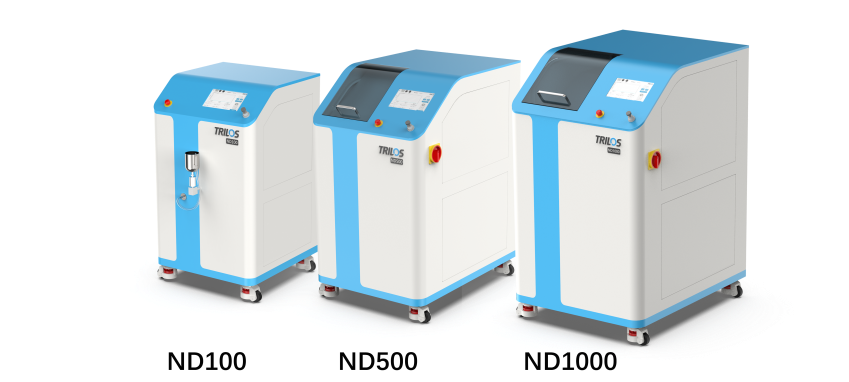
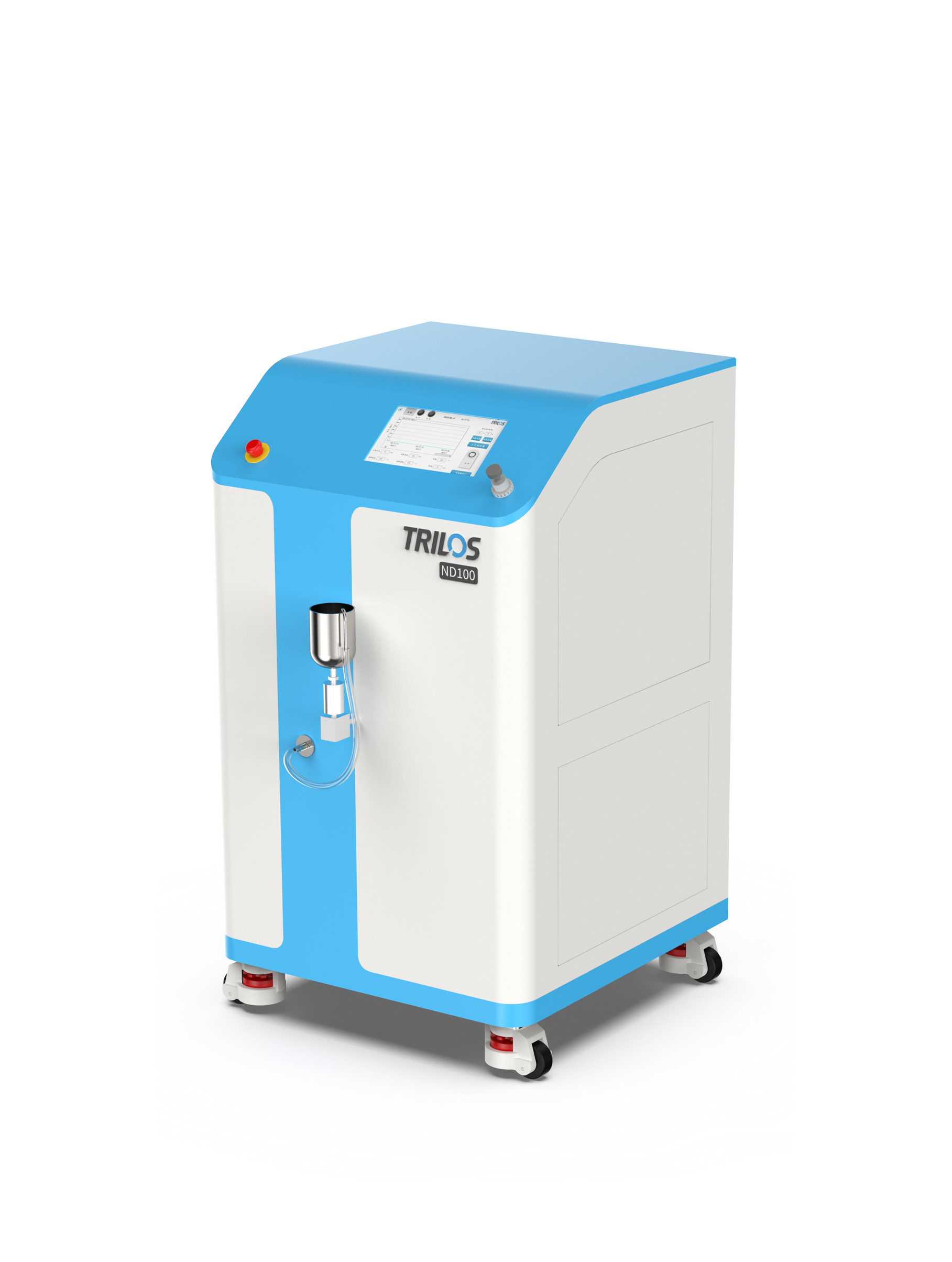
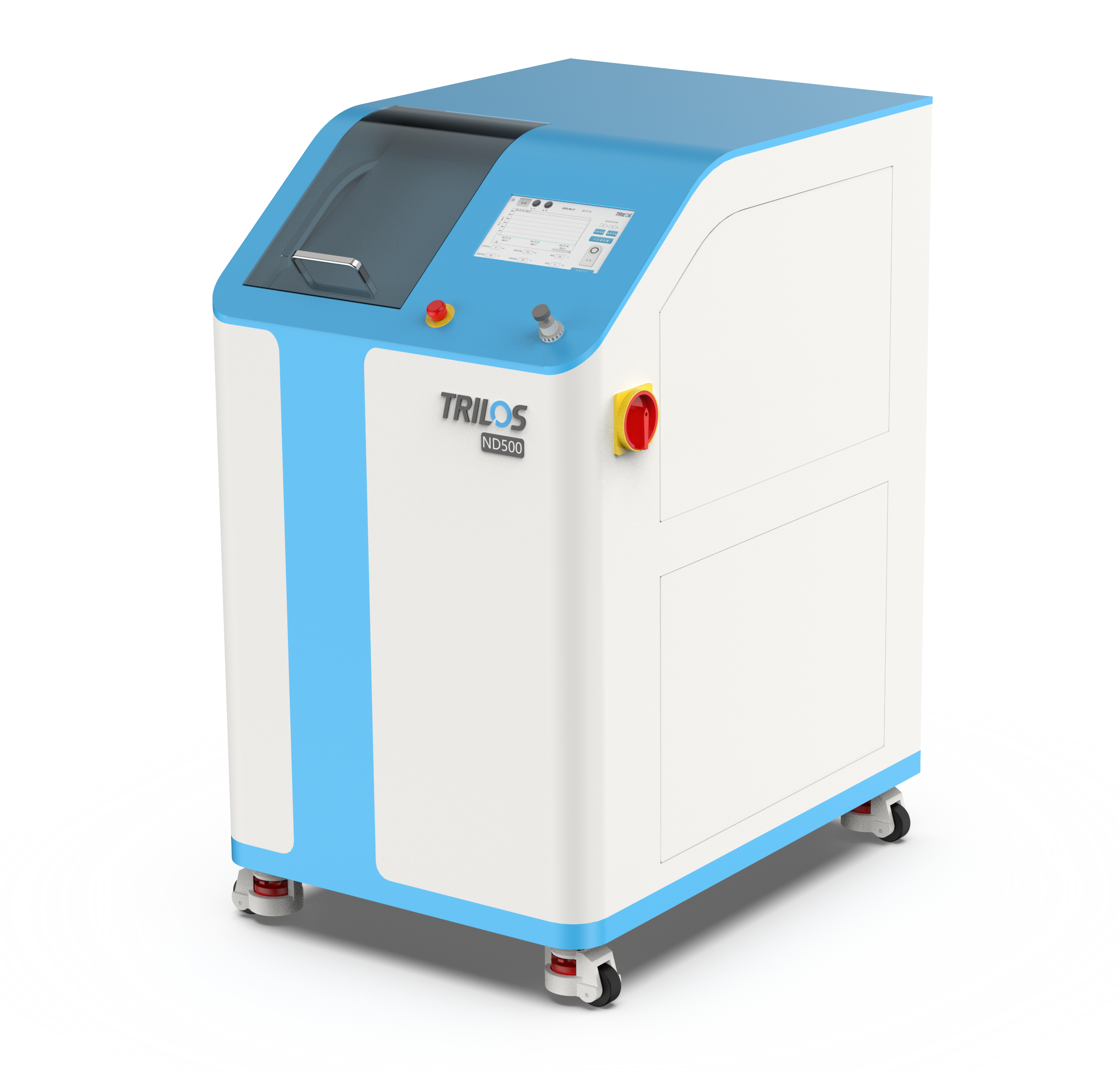
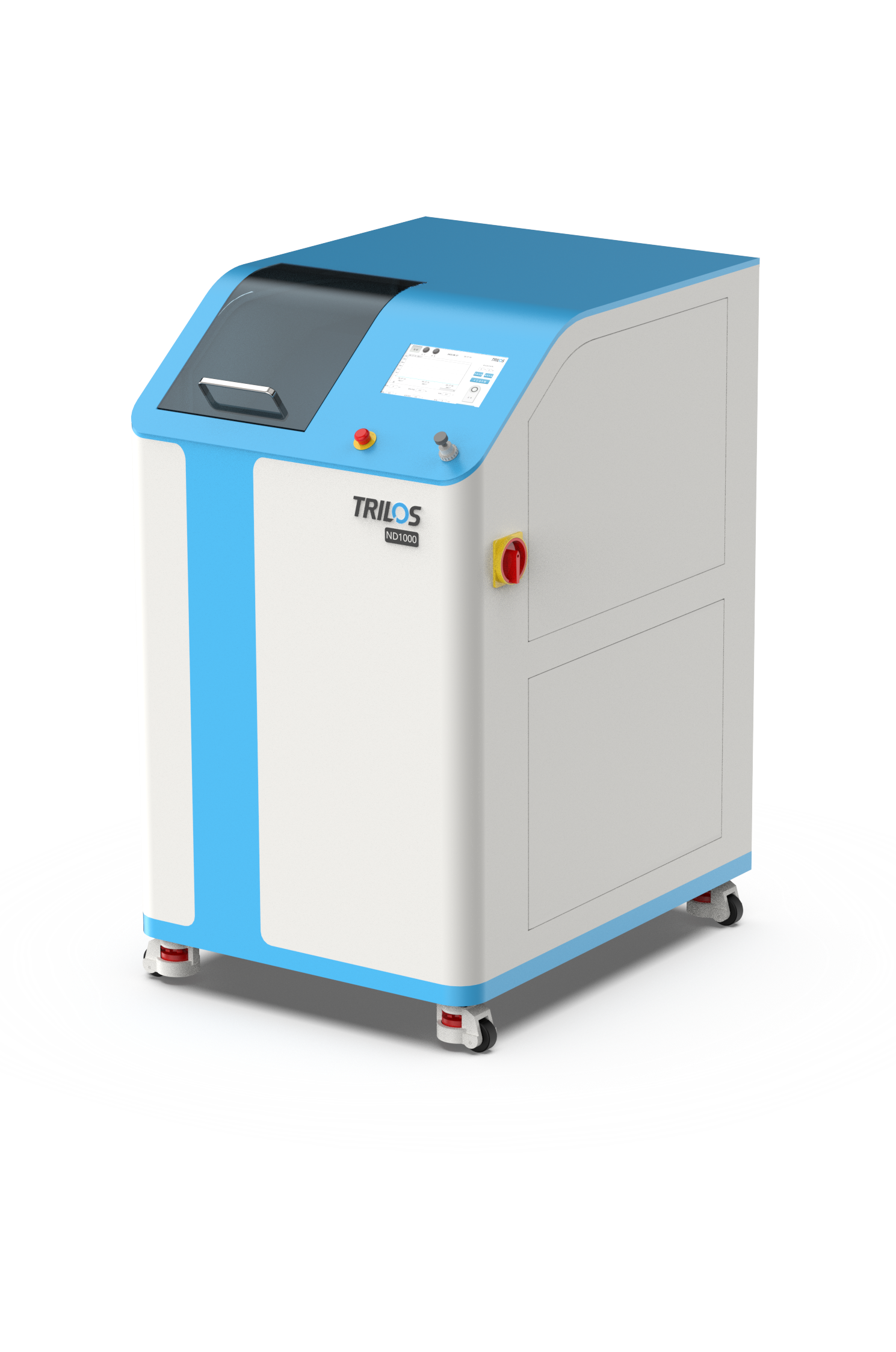
Furthermore, the system can form a synergistic process chain with the TRILOS Ultra-high Pressure Nano Homogenizer. While the OptiSense system ensures precise thickness control and uniformity, the Ultra-high Pressure Nano Homogenizer enhances slurry quality by optimizing particle dispersion, particularly for Ni–YSZ slurries. Together, they provide a robust technical foundation for high-quality, large-scale SOFC single cell manufacturing.