

Keywords: Emulsion Preparation Process, Emulsion Homogenization, Emulsion Homogenizer, Ultra-high Pressure Nano Homogenizer, Homogenizer
The core structure of an emulsion is a monomolecular phospholipid layer, where the internal disperse phase and external continuous phase have opposite polarities and are immiscible. Phospholipid molecules achieve stability through oriented arrangement: hydrophilic groups face the aqueous phase, while hydrophobic groups face the oil phase.
As a submicron emulsion type in the field of pharmaceutical formulations, intravenous emulsions typically have an average particle size in the range of 100-500 nm and are essentially thermodynamically unstable systems. Since the FDA approved Intralipid for marketing, numerous intravenous emulsions have been successfully approved worldwide, such as alprostadil, propofol, and flurbiprofen axetil, all of which are widely used in clinical settings.
The core properties of emulsions (e.g., stability, bioavailability) depend on uniform micro/nano-scale particle sizes, but two major issues are prone to arise during preparation:
-
Traditional processes (e.g., stirring, conventional homogenization) struggle to overcome "non-uniform particle sizes," easily forming large droplet aggregates that affect product consistency;
-
When pursuing nano-scale particle sizes, insufficient shear force or fluctuations in process parameters can lead to a wide particle size distribution, failing to meet the precise requirements of high-end applications (e.g., pharmaceuticals, cosmetics).
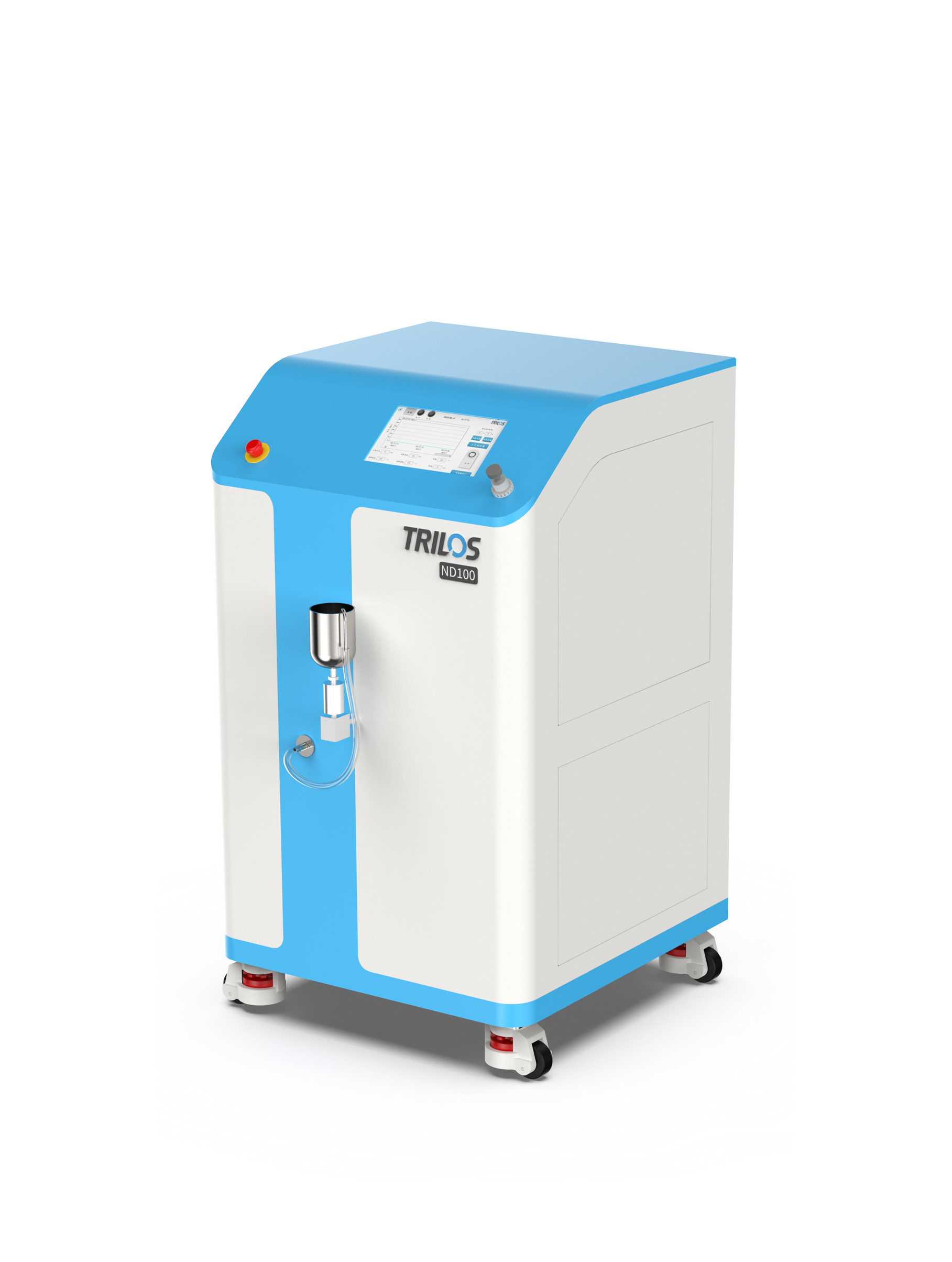
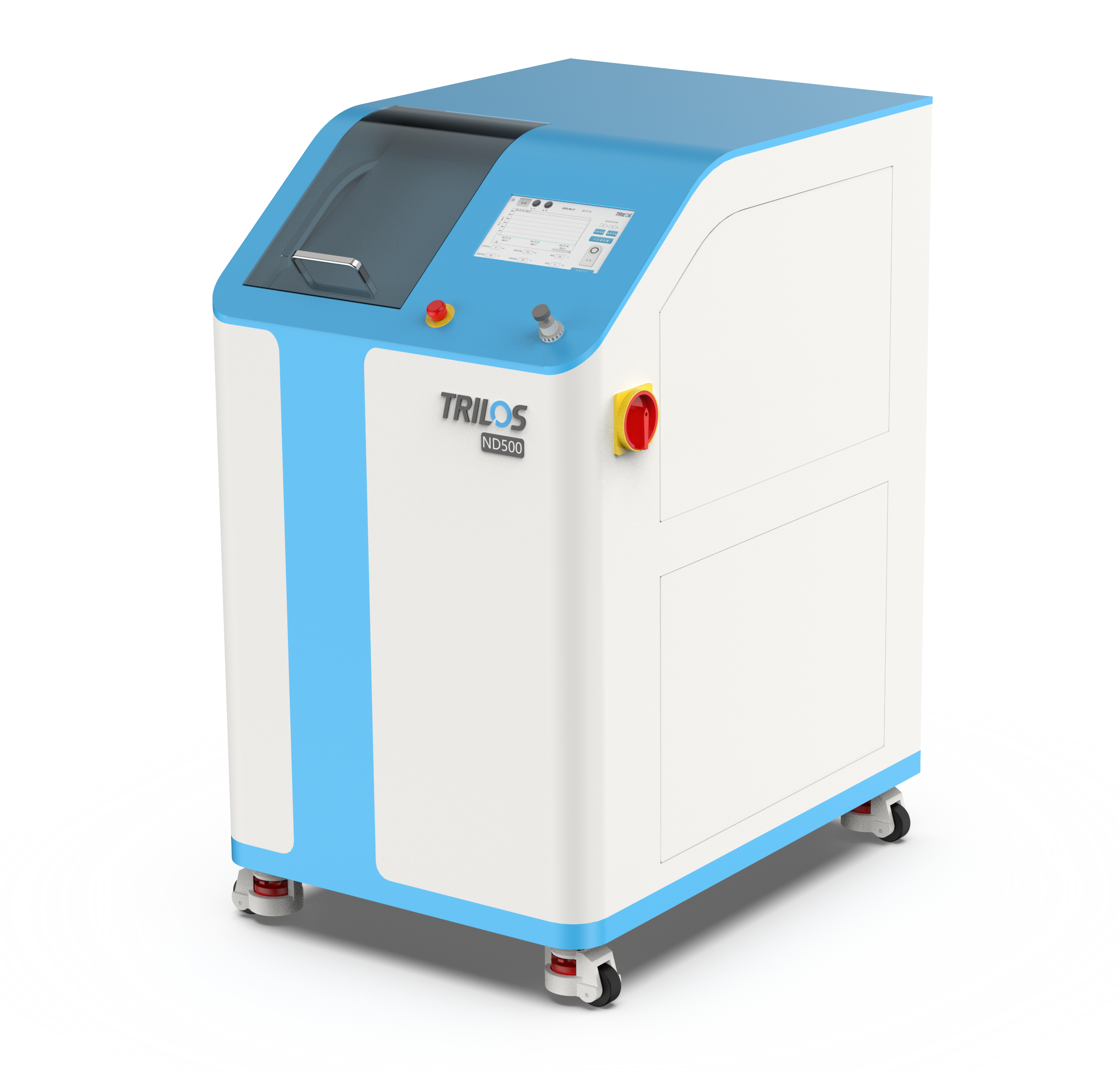
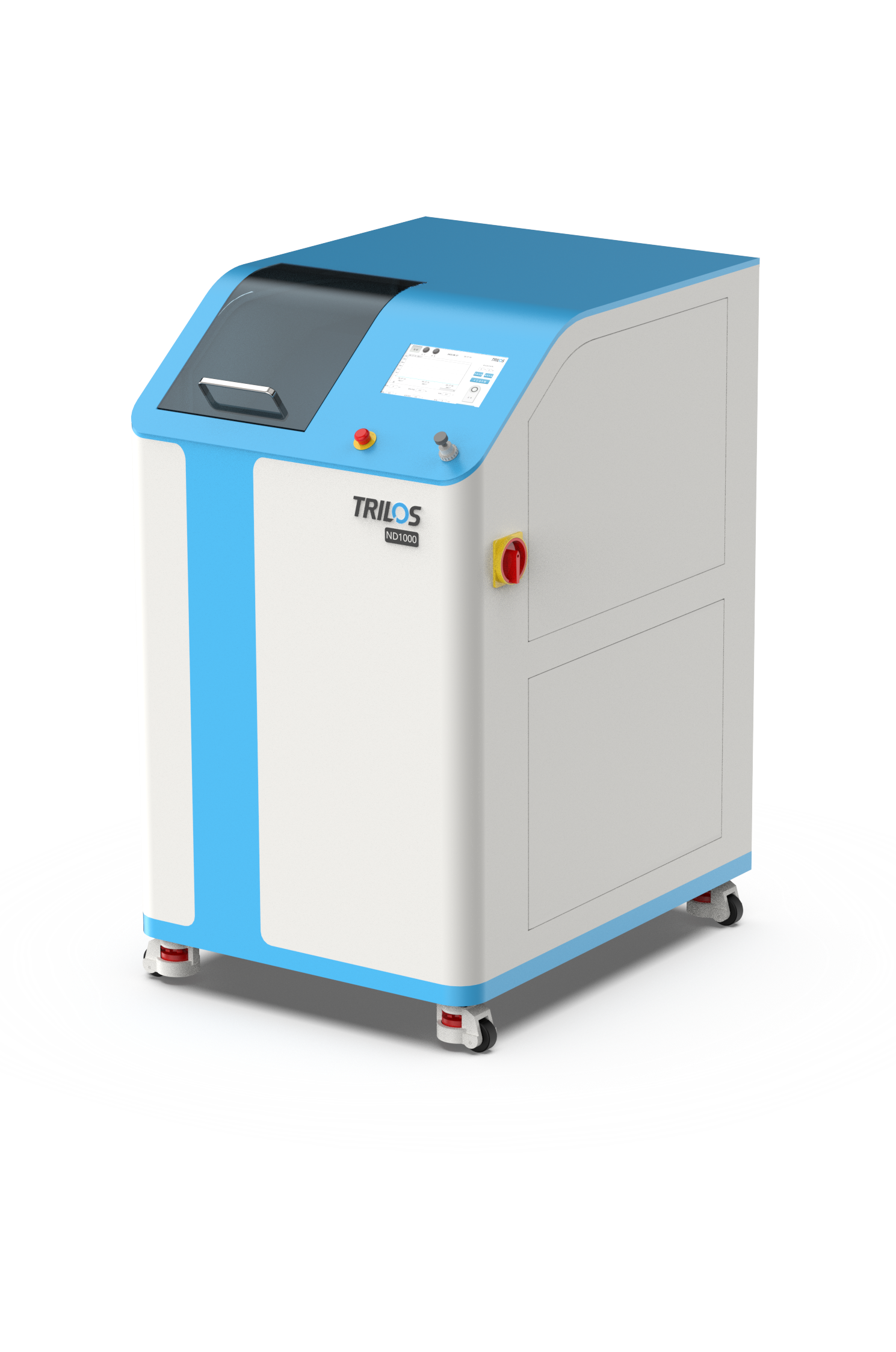
As a new type of high-pressure homogenization equipment, the TRILOS Ultra-high Pressure Nano Homogenizer integrates multiple functions including emulsion preparation, liposome construction, suspension dispersion, dispersion modulation, and cell disruption. In this study, the equipment was equipped with an interactive homogenizing chamber to specifically optimize the emulsion preparation process. Meanwhile, the stability of the final product and various influencing factors were systematically investigated to provide scientific and reliable data support for subsequent clinical research.
1. Introduction to TRILOS Ultra-high Pressure Nano Homogenizer
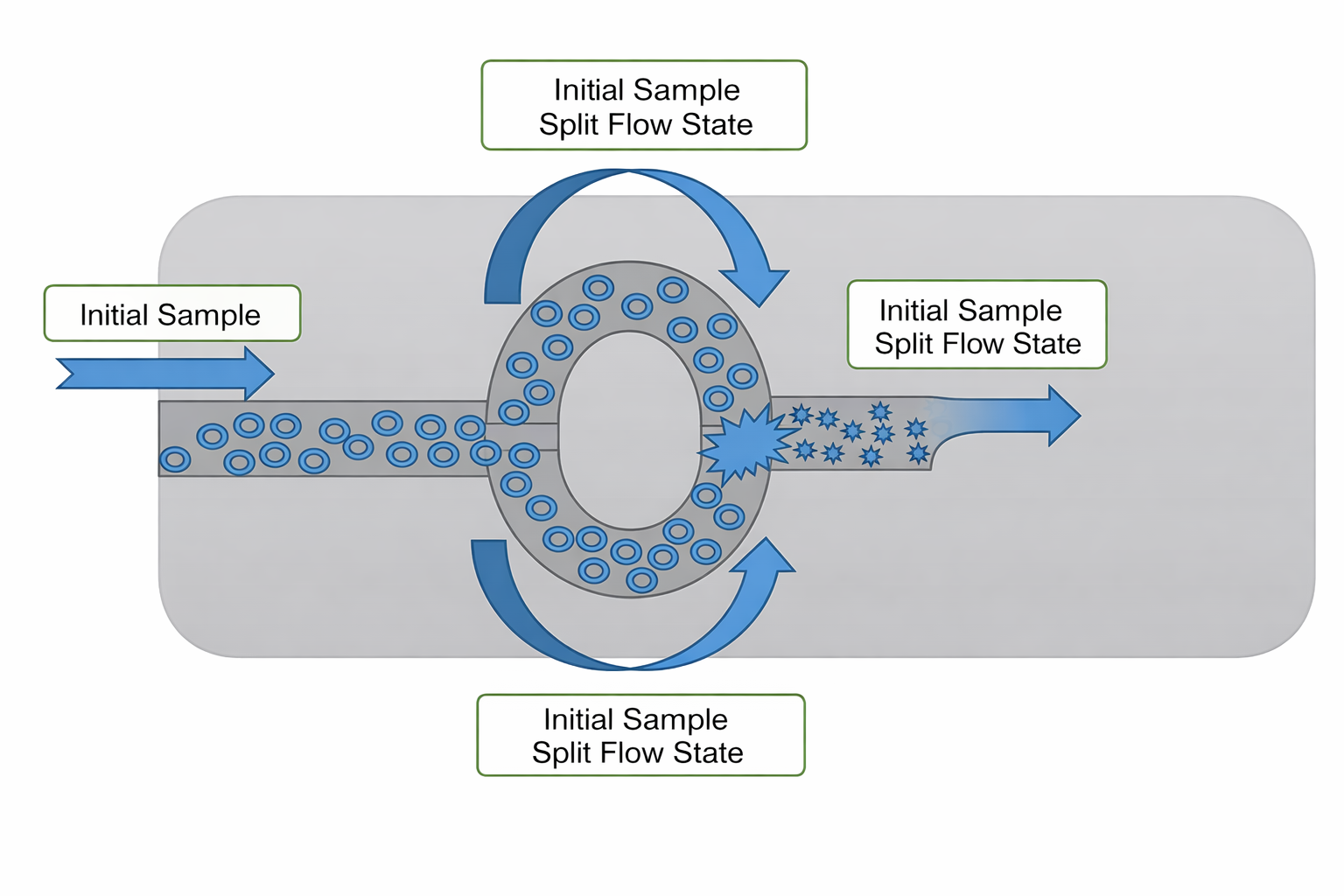
The TRILOS Ultra-high Pressure Nano Homogenizer adopts the principle of high-pressure jetting, which can generate enormous shear force, collision force, and cavitation force in a short time, thereby concentrating a large amount of energy on the material. This enables the components of the material to exist in a fully homogenized state, significantly improving efficiency.
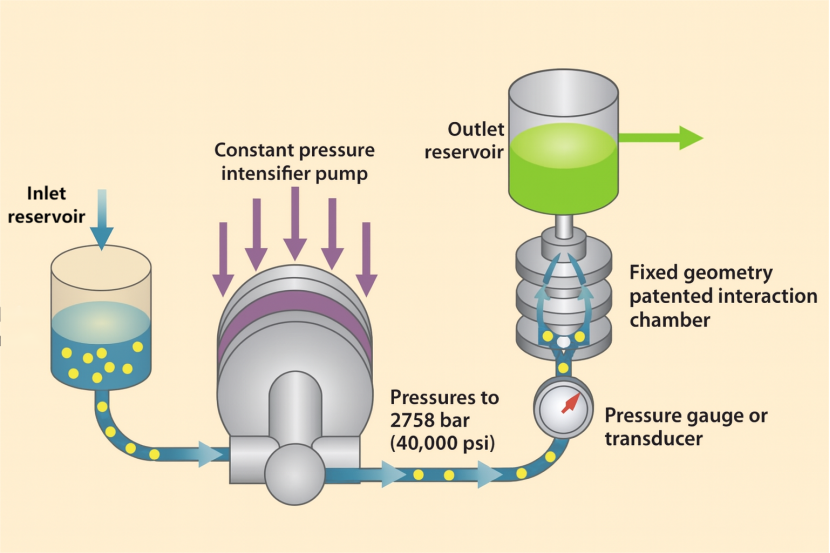
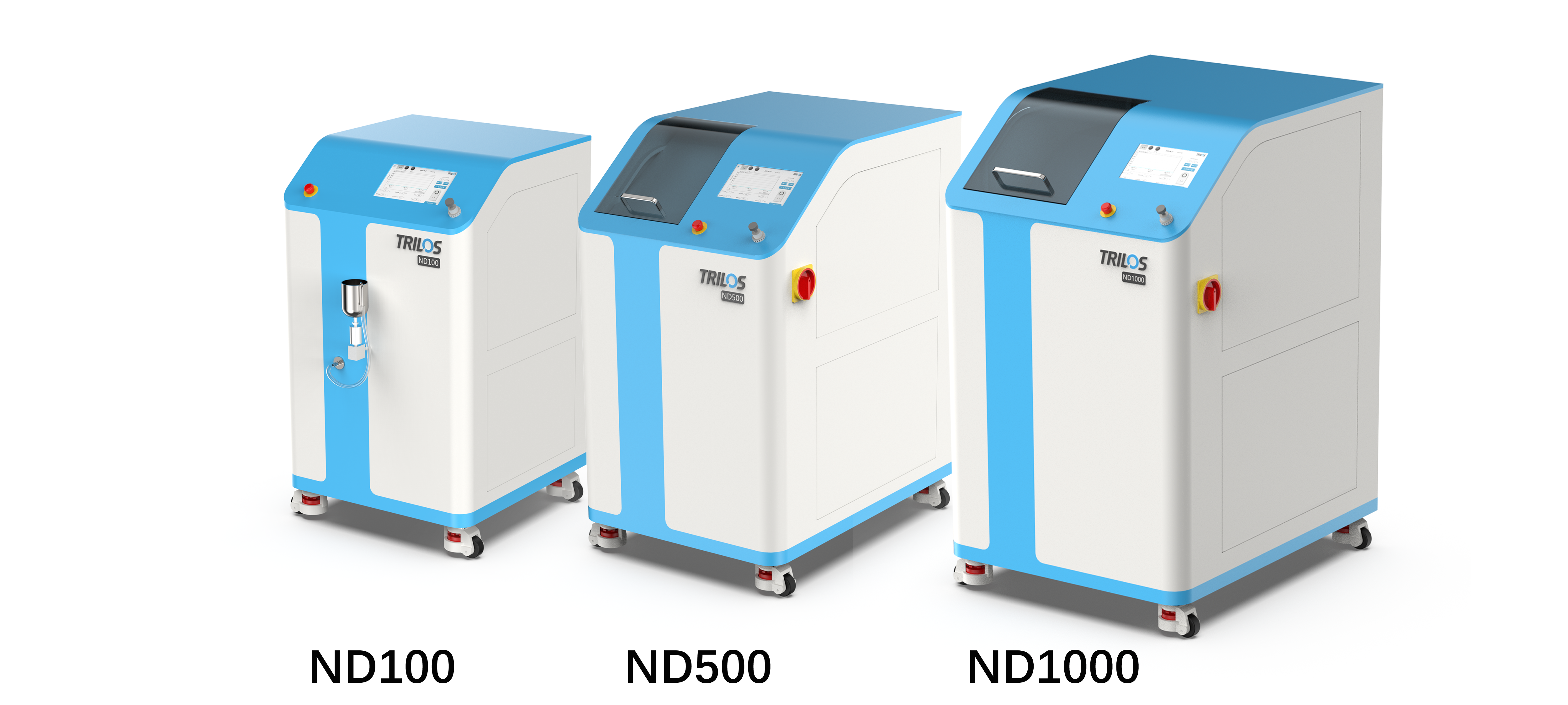
The TRILOS Ultra-high Pressure Nano Homogenizer is free from clogging and leakage. It is equipped with a 10-inch industrial touch screen that can real-time monitor pressure curves, with a maximum pressure of up to 4000 bar.
2. Experimental Description
Oil Phase Preparation
Weigh the raw drug, soybean oil, and egg yolk lecithin according to the formula (under nitrogen protection). Maintain the soybean oil at a water bath temperature of 60℃ under continuous stirring with a high-speed shear mixer, and slowly add egg yolk lecithin until it is completely dissolved. Then, add the raw drug and stir until it is fully dissolved in the oil phase.
Aqueous Phase Preparation
Weigh glycerol and measure sterile water for injection according to the formula. Add glycerol to water and stir evenly.
Primary Emulsion Formation by Wet Gum Method
Under continuous stirring, slowly add the entire aqueous phase to the oil phase, then stir to obtain a white emulsion, i.e., the primary emulsion.
Experimental Design for Homogenization Process Research of TRILOS Ultra-high Pressure Nano Homogenizer
Homogenization pressure and homogenization times were selected as the investigation factors, with three levels set for each factor (Table 1). According to the multi-factor level table, experiments were arranged as designed to prepare nanoemulsions. The drug content and emulsion droplet particle size of the prepared emulsions were used as indicators to investigate the effects of factors at different levels on emulsion quality. After homogenization, the emulsion was taken, and the particle size was measured by dynamic light scattering (DLS) at room temperature to reflect the effect of the preparation process. The change in emulsion droplet size after the above cycle was investigated, and the differences between batches of samples were compared to reflect the stability of each sample.
| Level | Time | Pressure (psi) | Circulation Time (C) |
| 1 |
5 |
10000 | 1 |
| 2 | 10 | 15000 | 3 |
| 3 | 15 | 20000 | 5 |